desktop, mobile
Sniffood
A system-driven app and dashboard for rescuing surplus bread through redistribution and prediction.
My role
UX Research & UI designer
Project
Self-initiated
Timeline
April-July 2024
Tools
Figma, FigJam, Miro, Google Forms

Concept video

Solution

A surplus bread rescuer
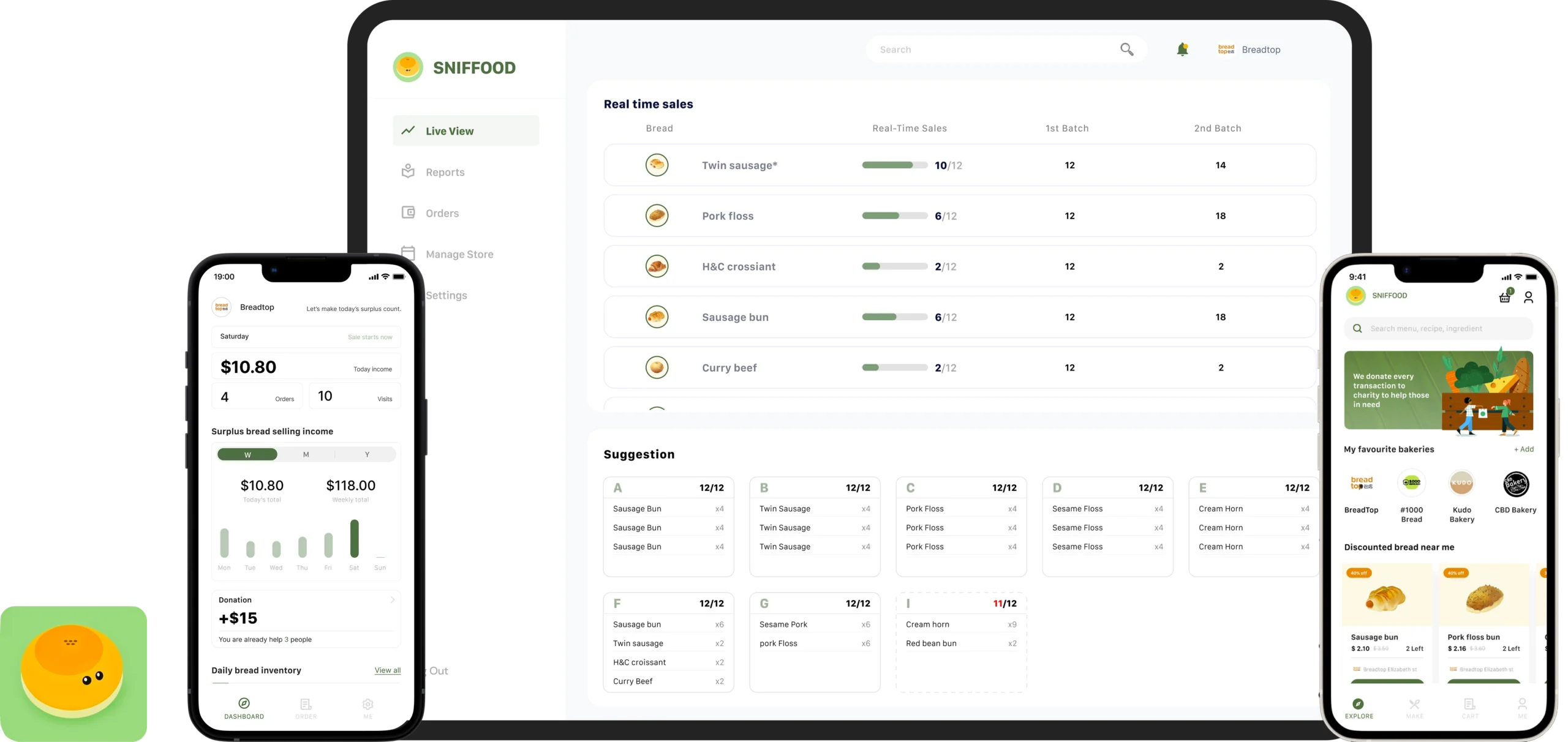
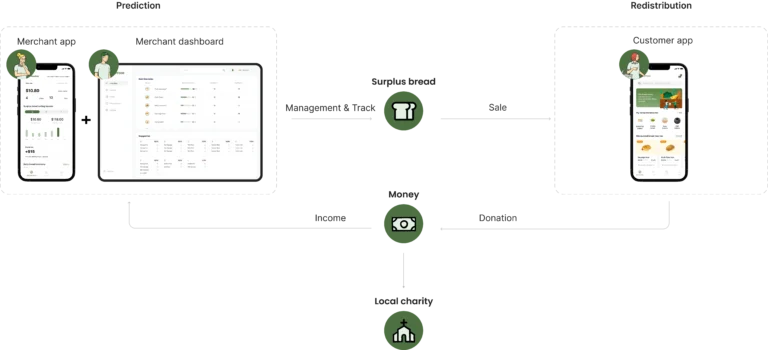
Sniffood is a system-driven app and dashboard, which offers bakery merchants a POS data-based prediction tool, a redistribution-based consumer app, secure donation solution, designed to address surplus bread waste.
Problem

The problem

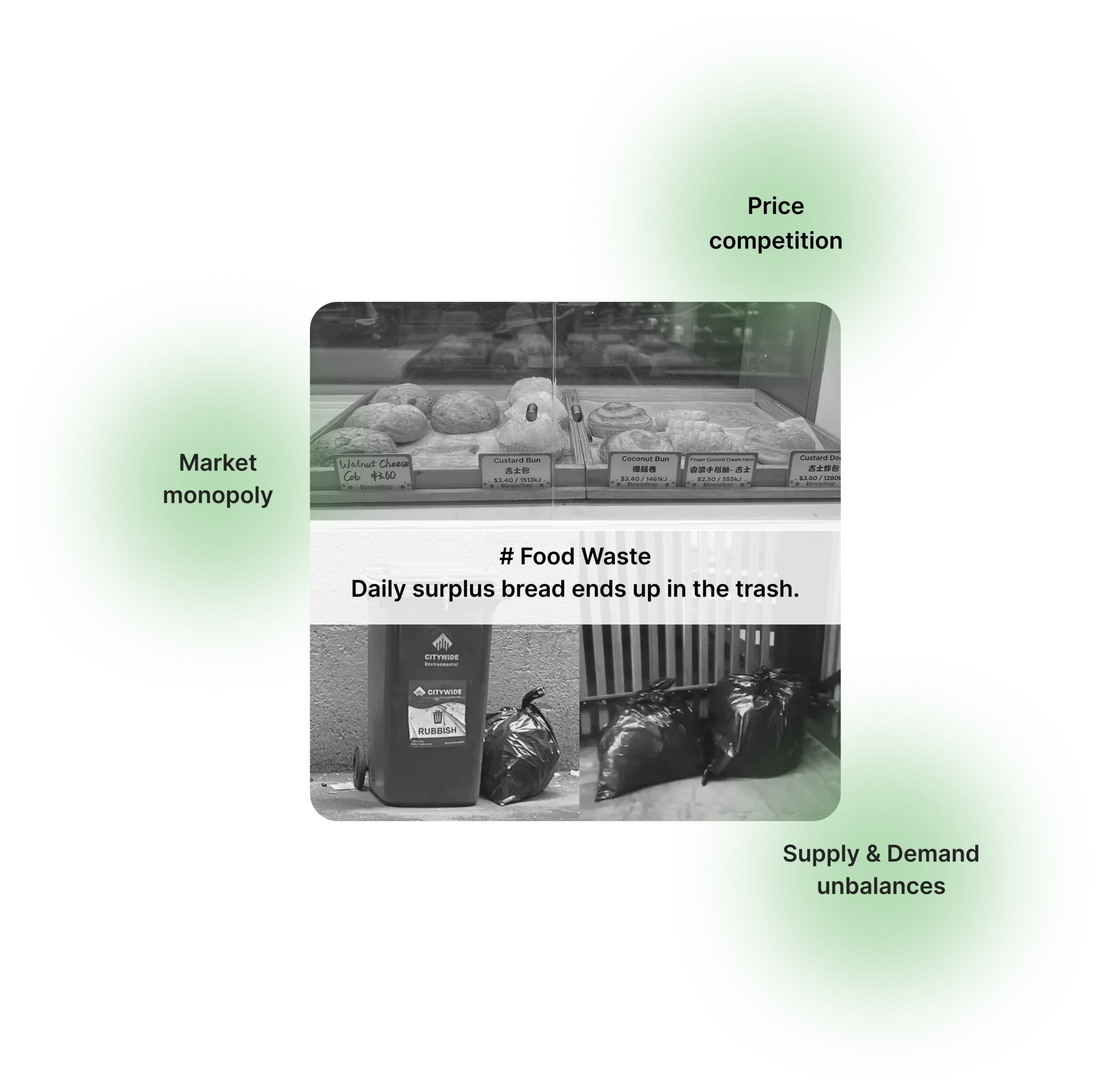
As a part-time bakery employee, I noticed that there is leftover bread every day at closing time. This leftover bread is fresh and still good to eat, but unfortunately, it ends up getting thrown into the trash.
So this sparked the question for me. Why is there an oversupply of bread in Australian bakeries? More specifically, the problem was that the bakery struggles to produce appropriately, resulting in daily waste of surplus bread.
Opportunity

Opportunity

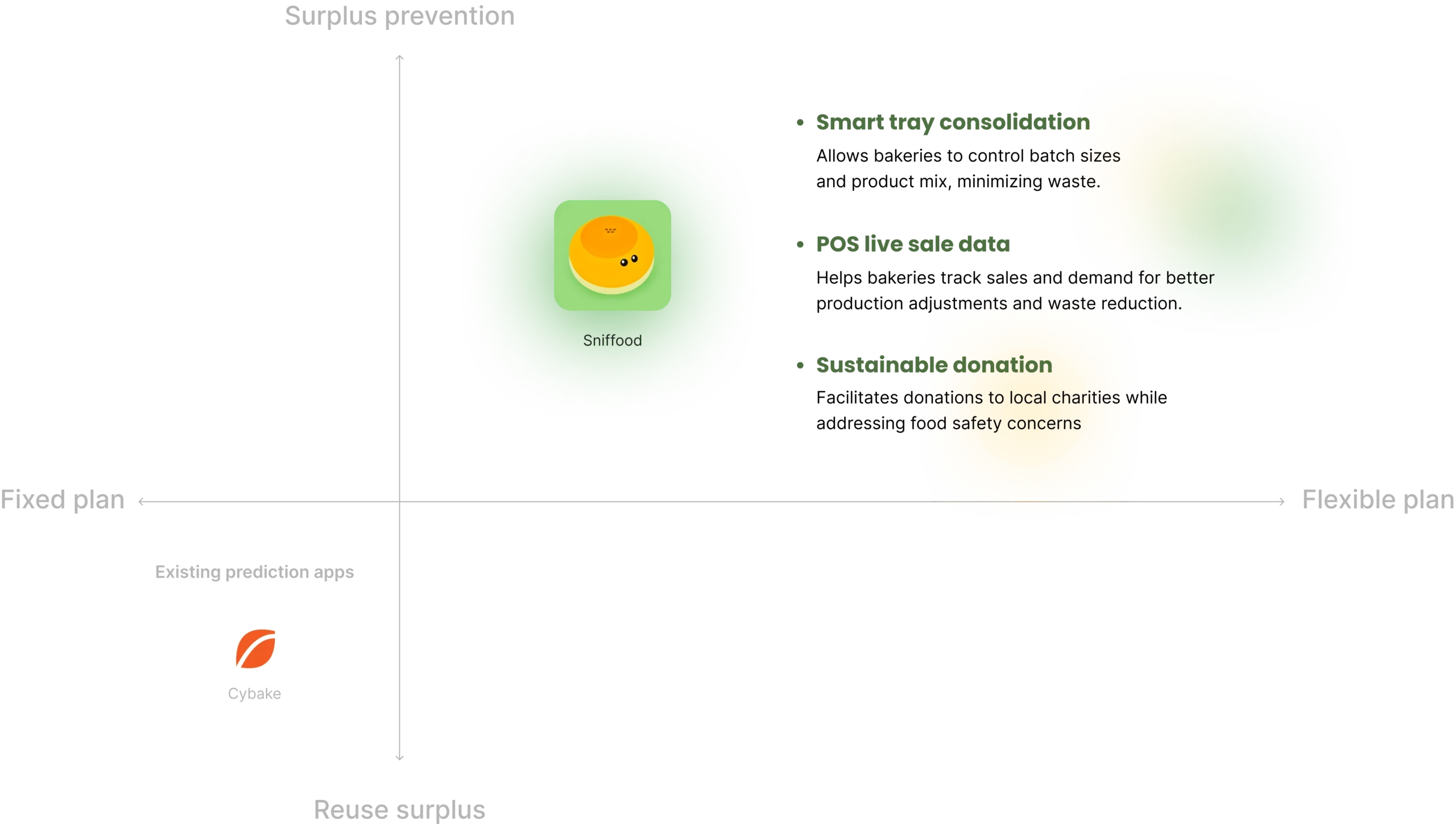
Competitive analysis
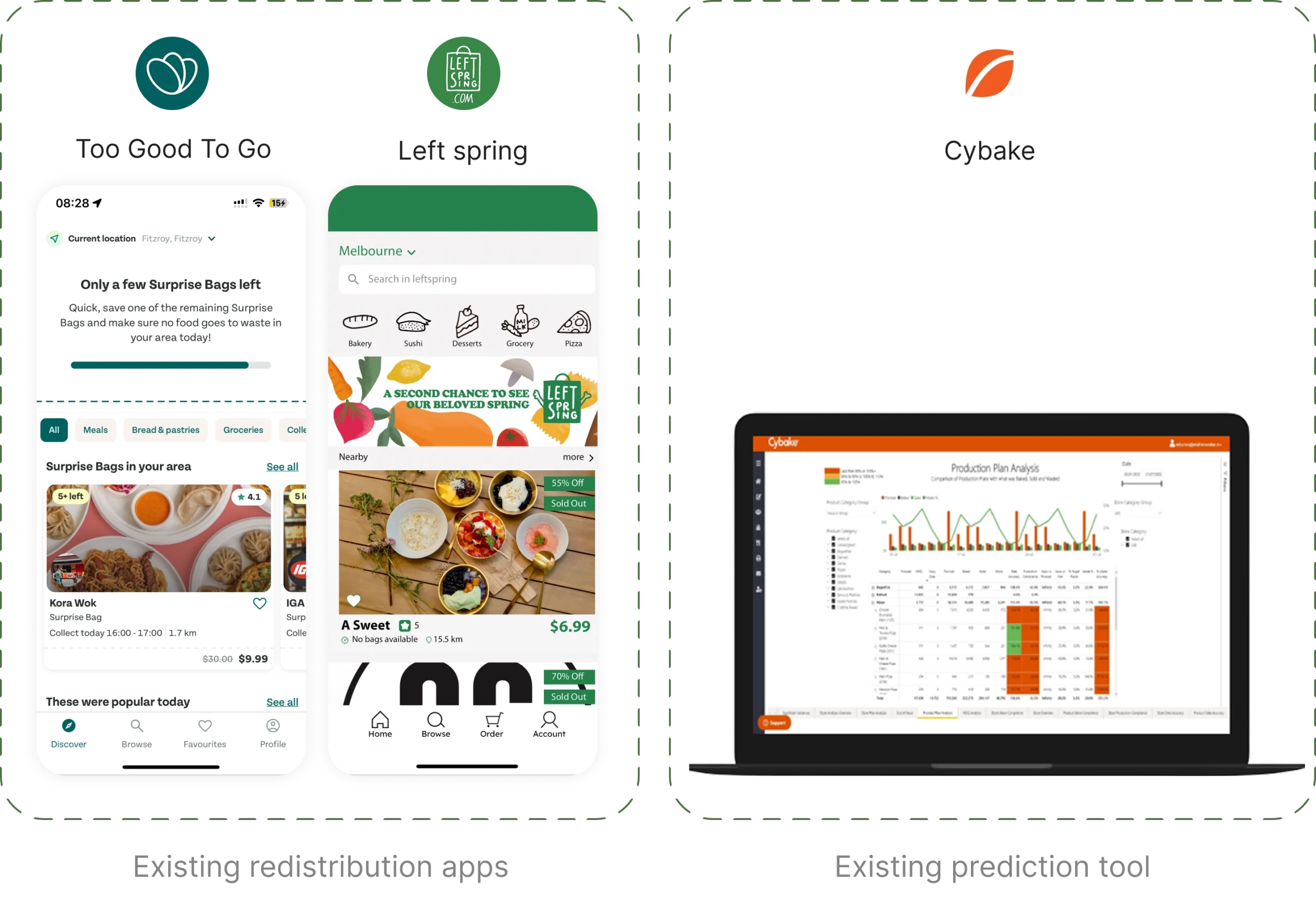
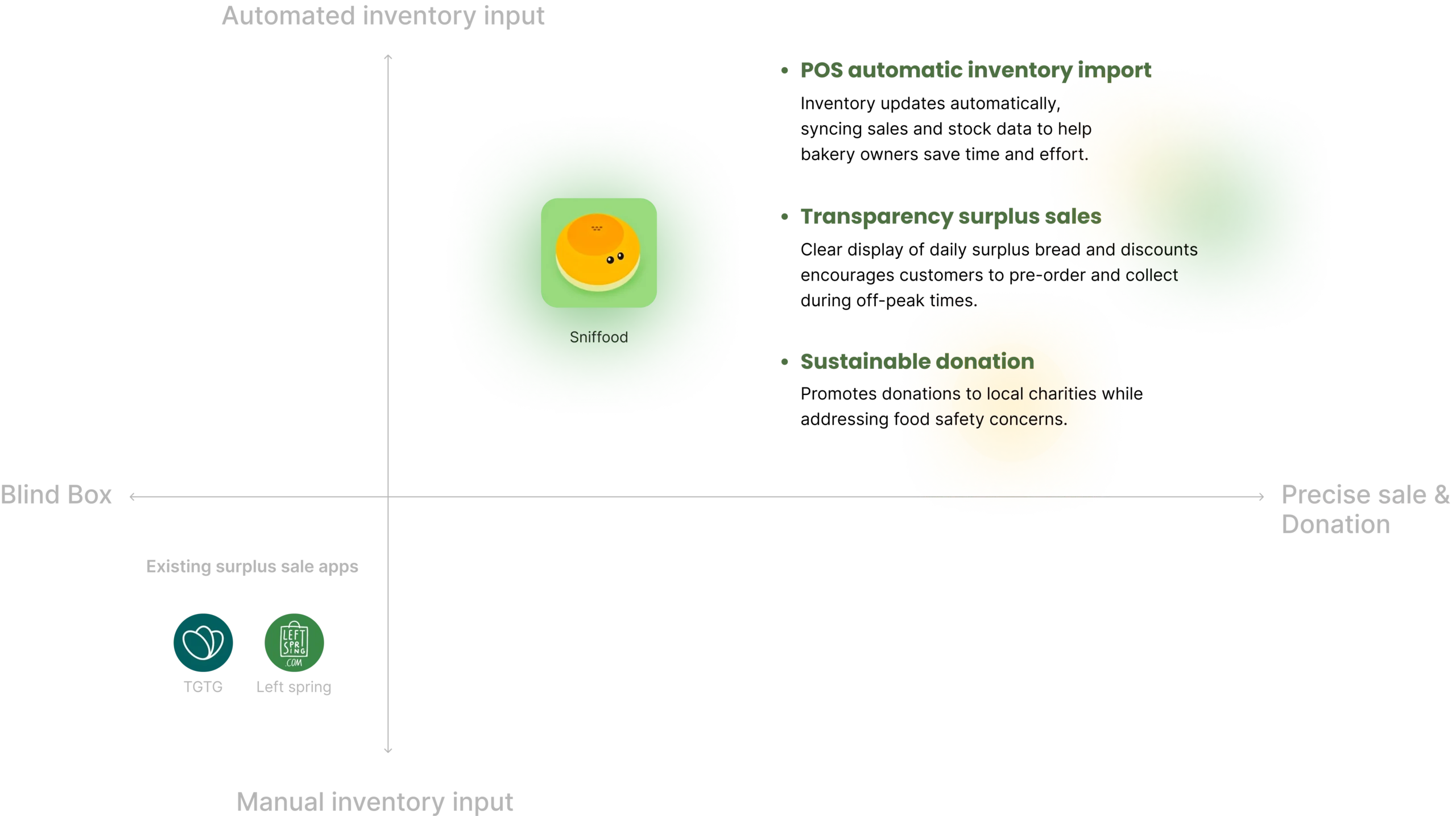
By conducting competitor analysis, I aimed to better understand the problem area and identify gaps in current solutions.
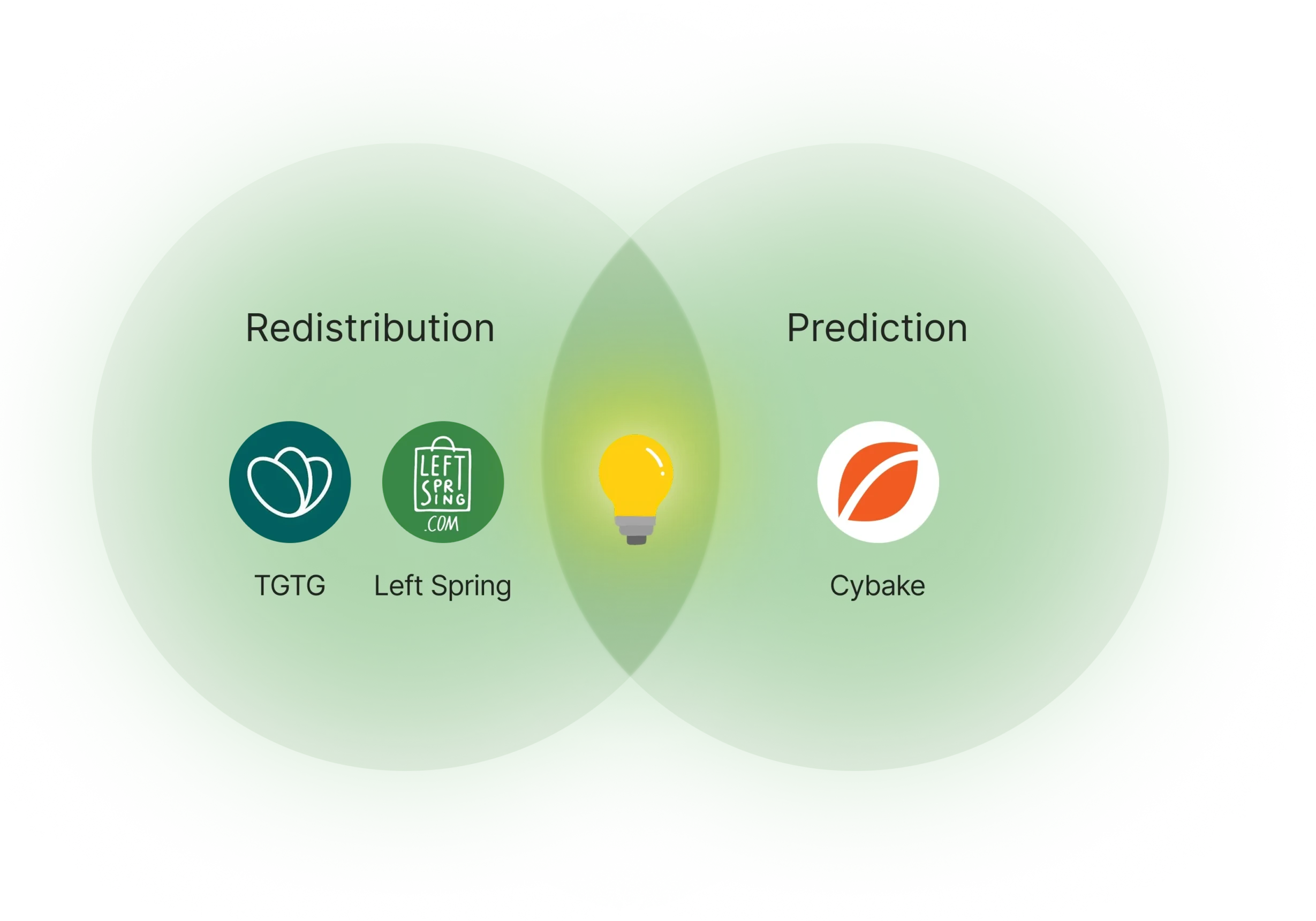
None of these competitors could both predict production needs and effectively handle surplus food.
Research

Domain expert interview

User interviews

Participants
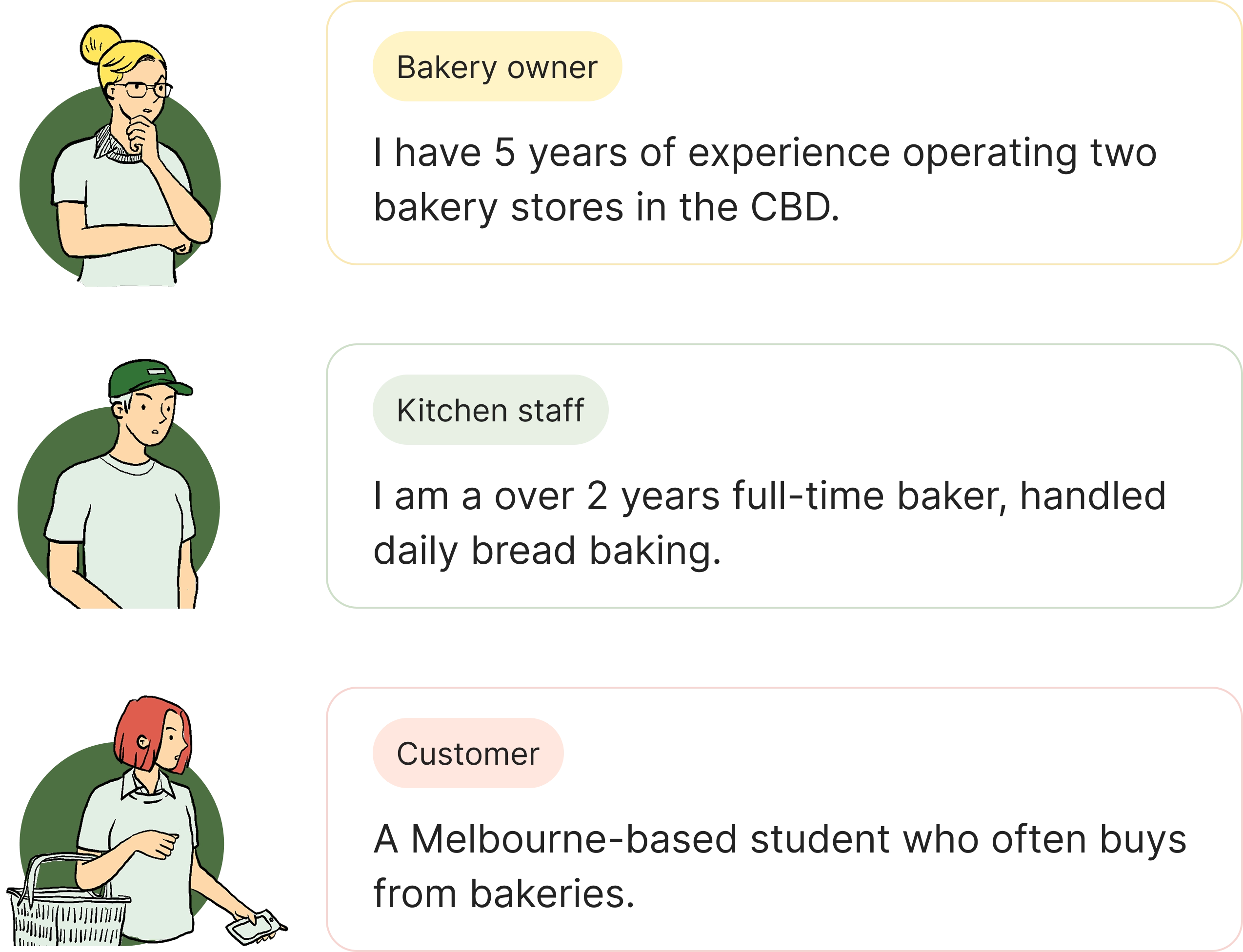
I recruited participants in a Melbourne CBD bakery, including bakery owner and staff members with relevant work experience as well as customers, in order to capture insights from both perspectives.
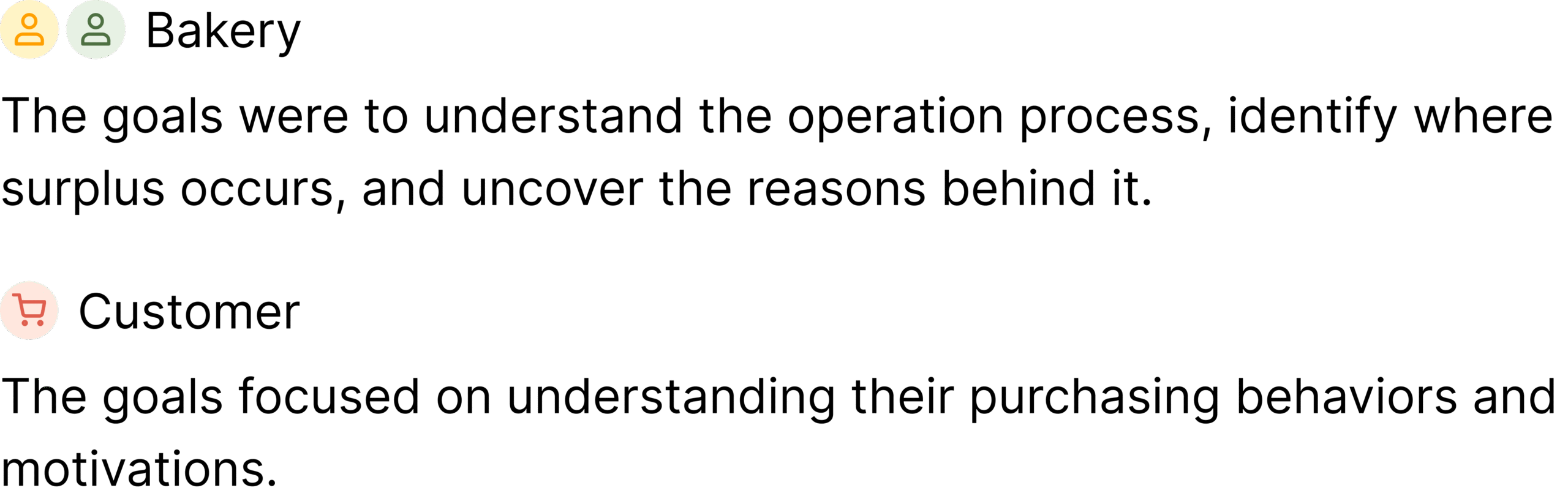
My Goals
Methodology
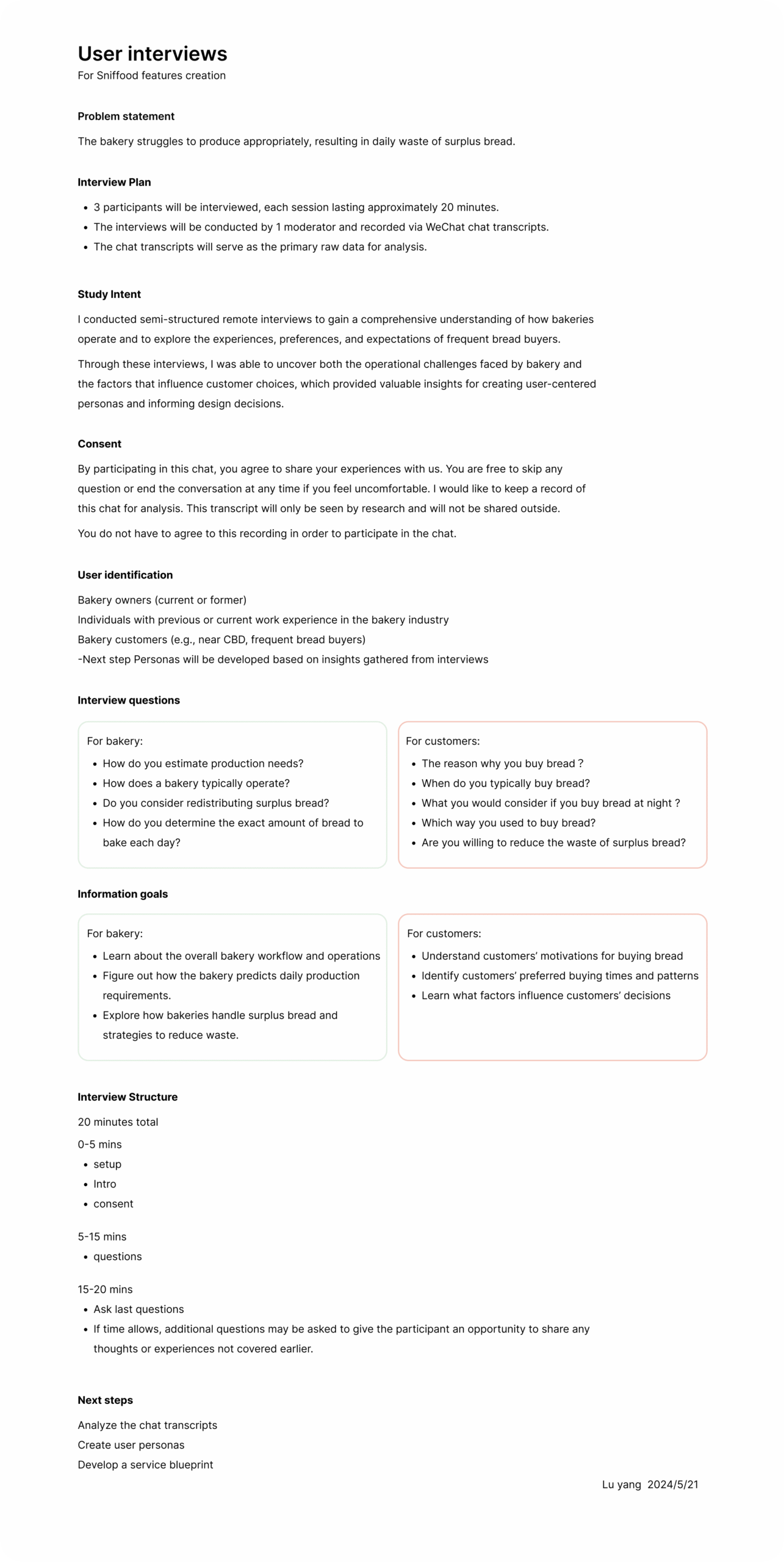
Remote moderated semi-structured interviews
& Google Forms online questionnaire survey

Understanding audiences

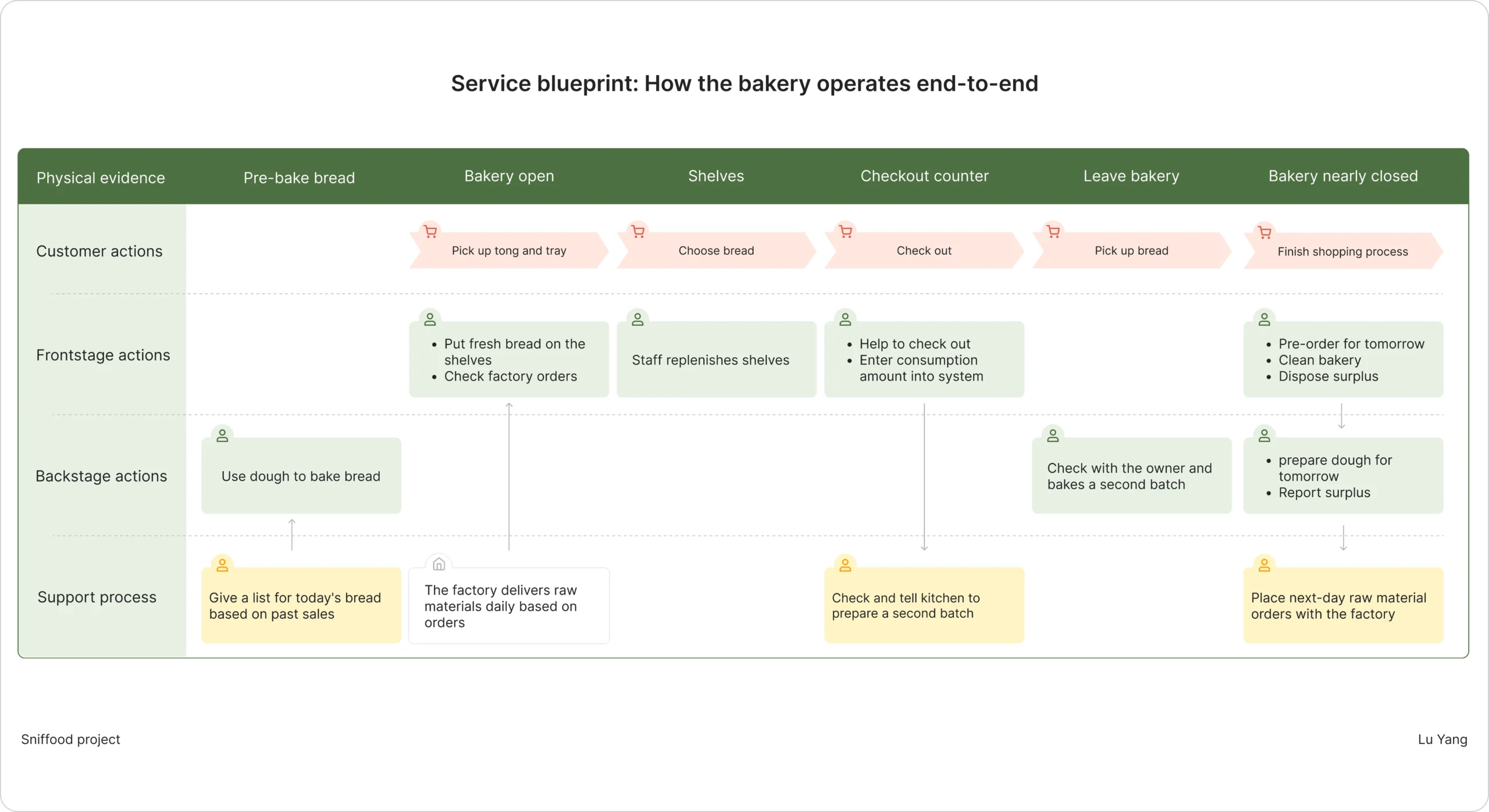
Service blueprint
Through expert and stakeholder interviews, I mapped the bakery’s operations and identified improvement opportunities.
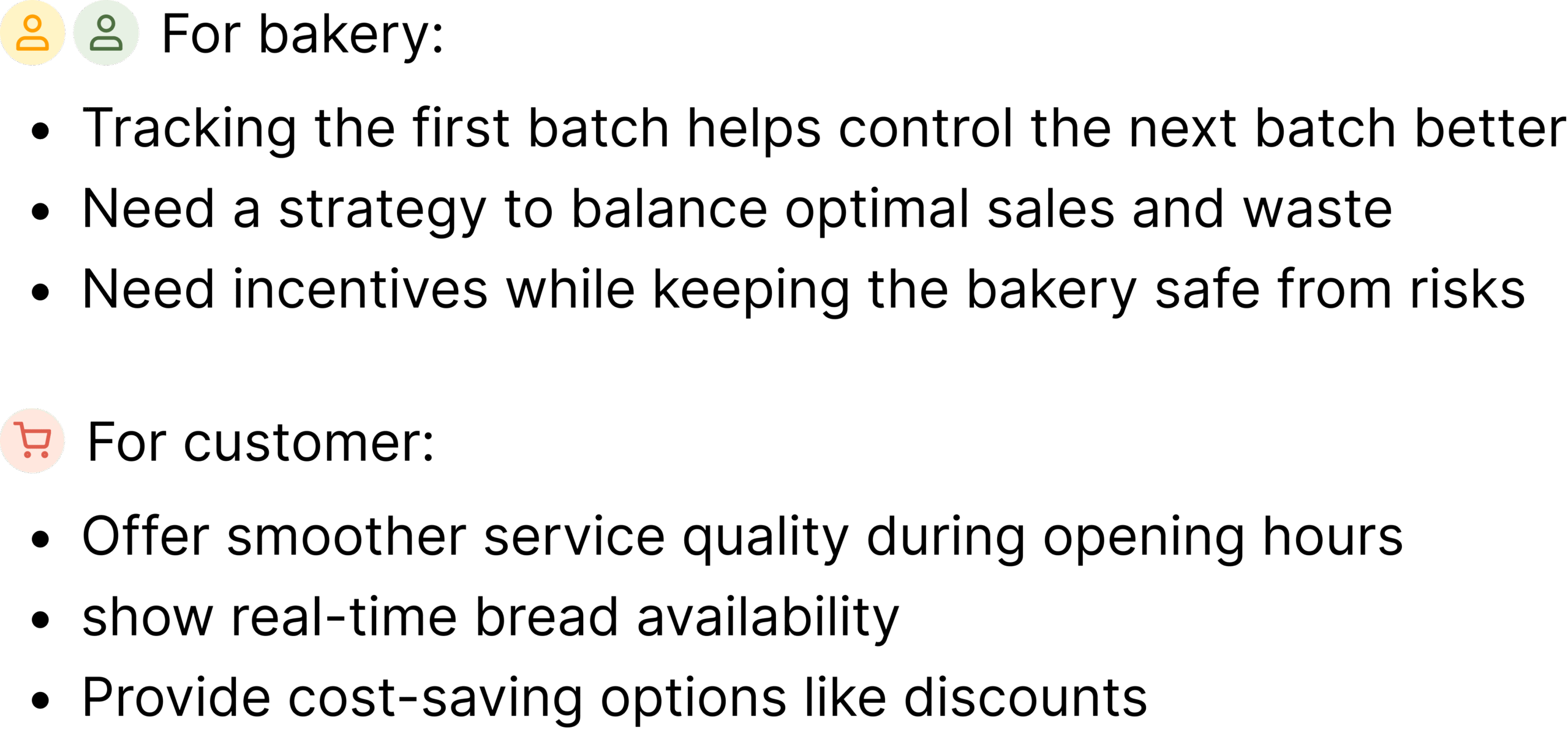
They want to...

How might we question

Product Thinking

Product thinking

Auto prediction tool
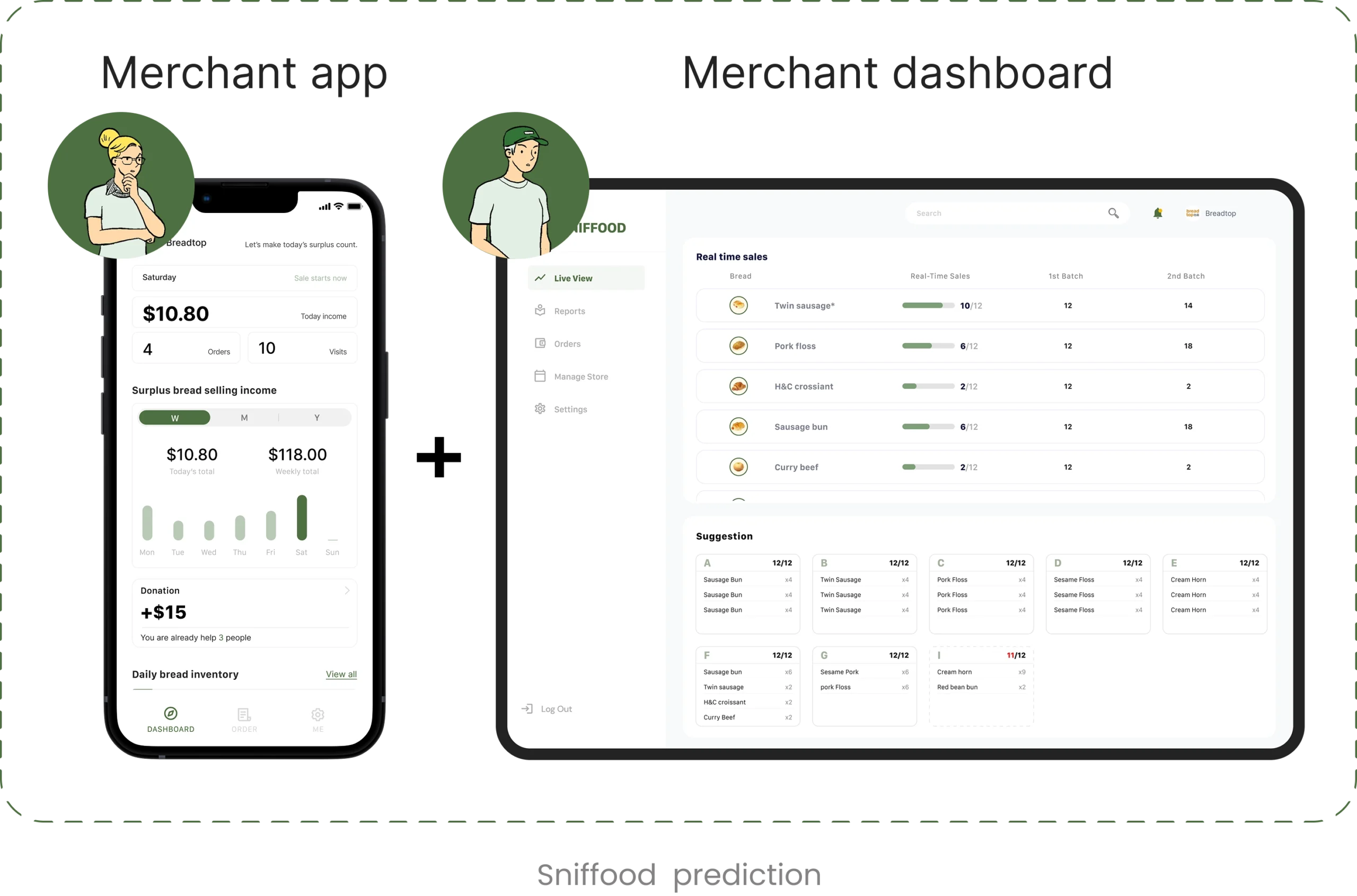
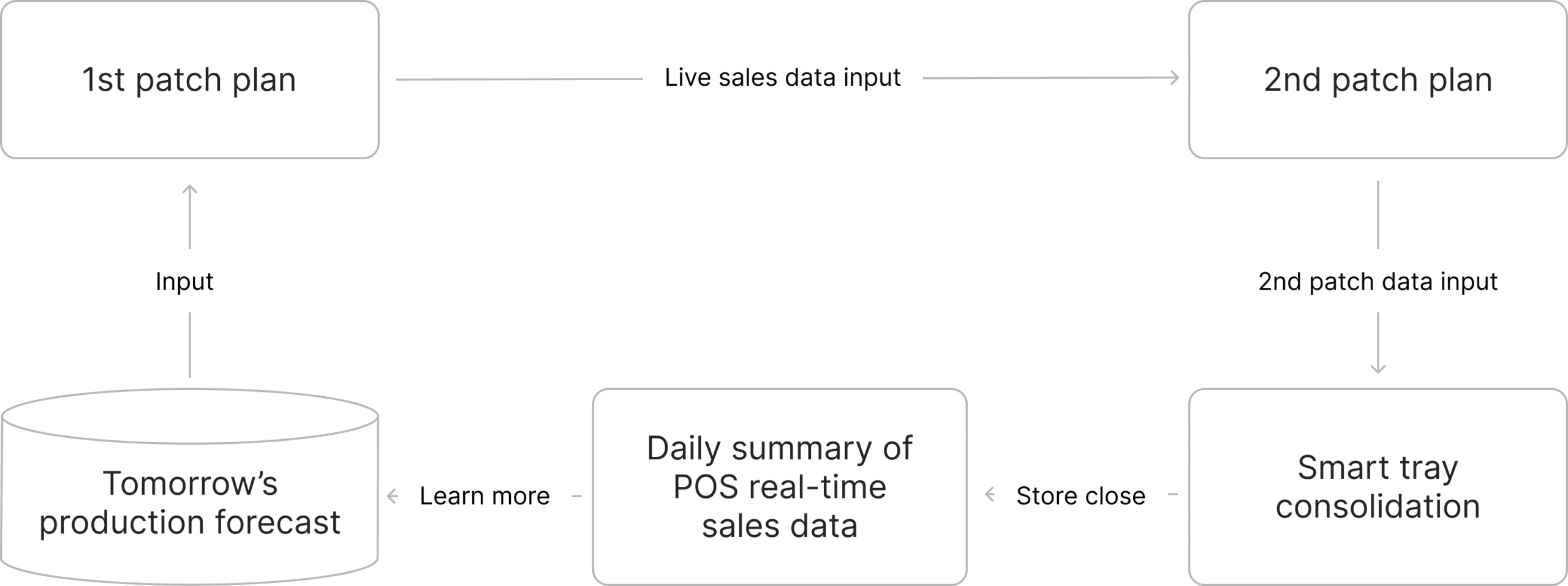
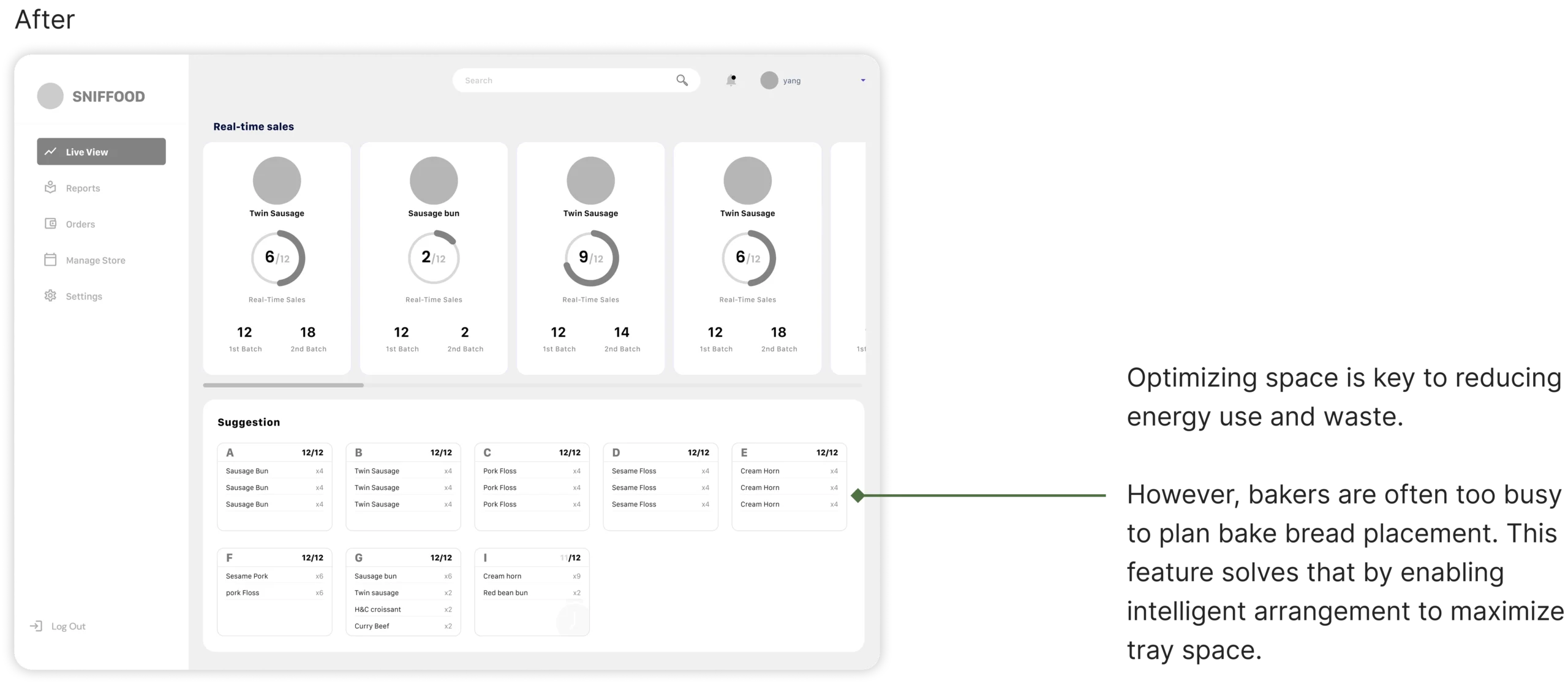
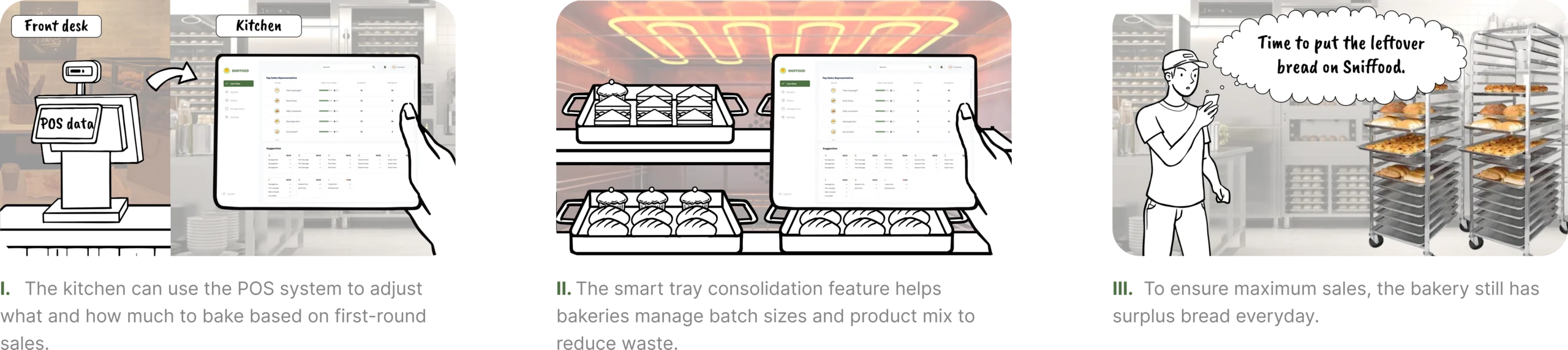
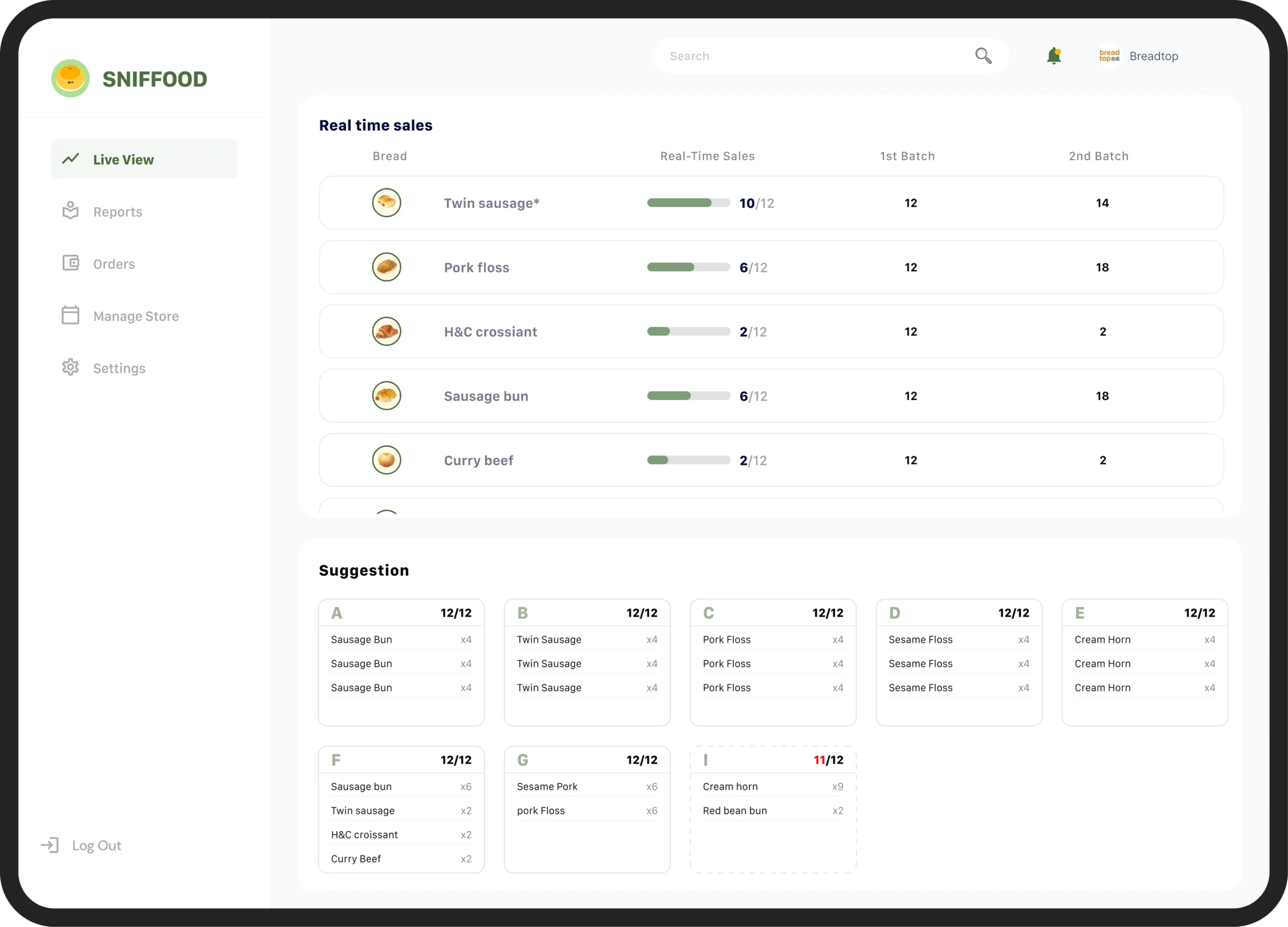
Bakery owners can optimize their production with the auto prediction tool, which forecasts the required quantity for each batch and supports smart tray consolidation.

By integrating with their POS system, it automates accounting and sales tracking, helping reduce waste and improve efficiency.
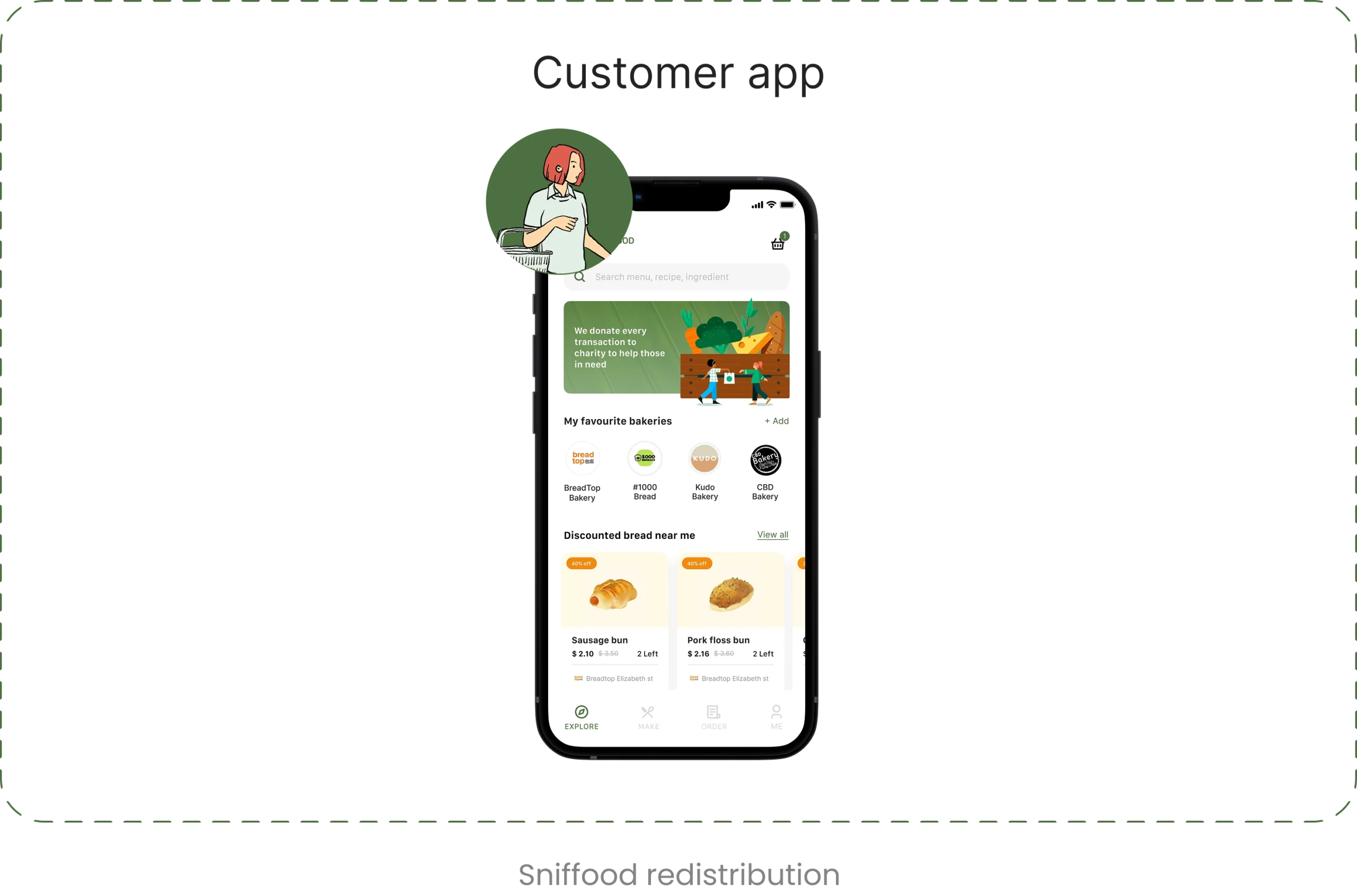
App connects with live inventory
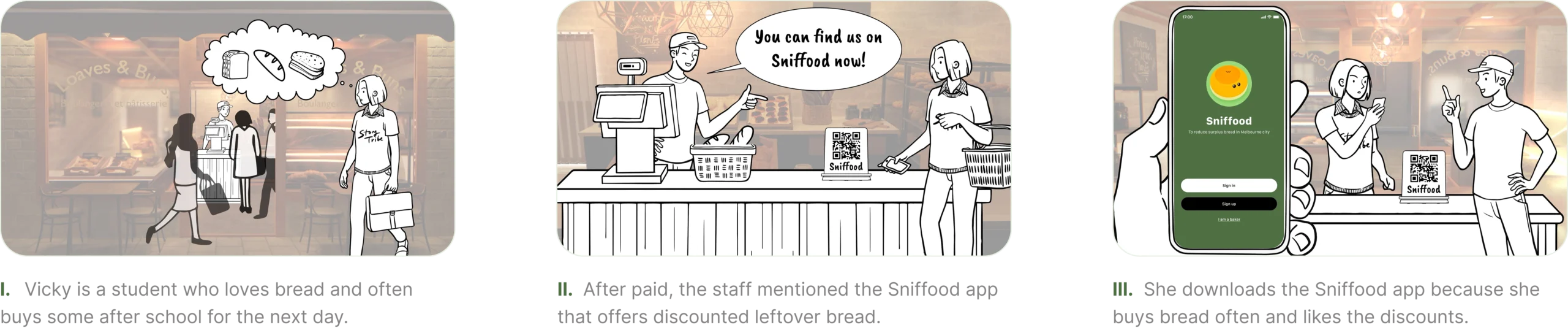
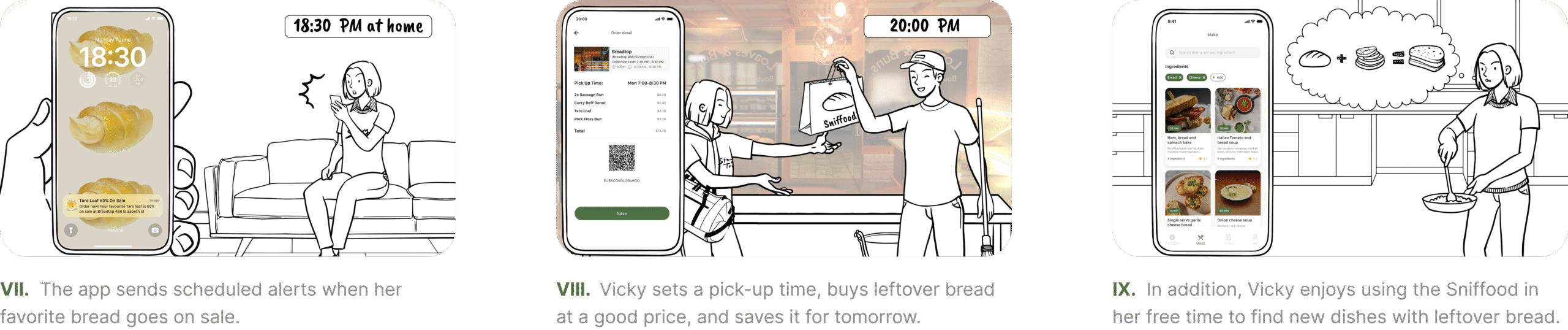
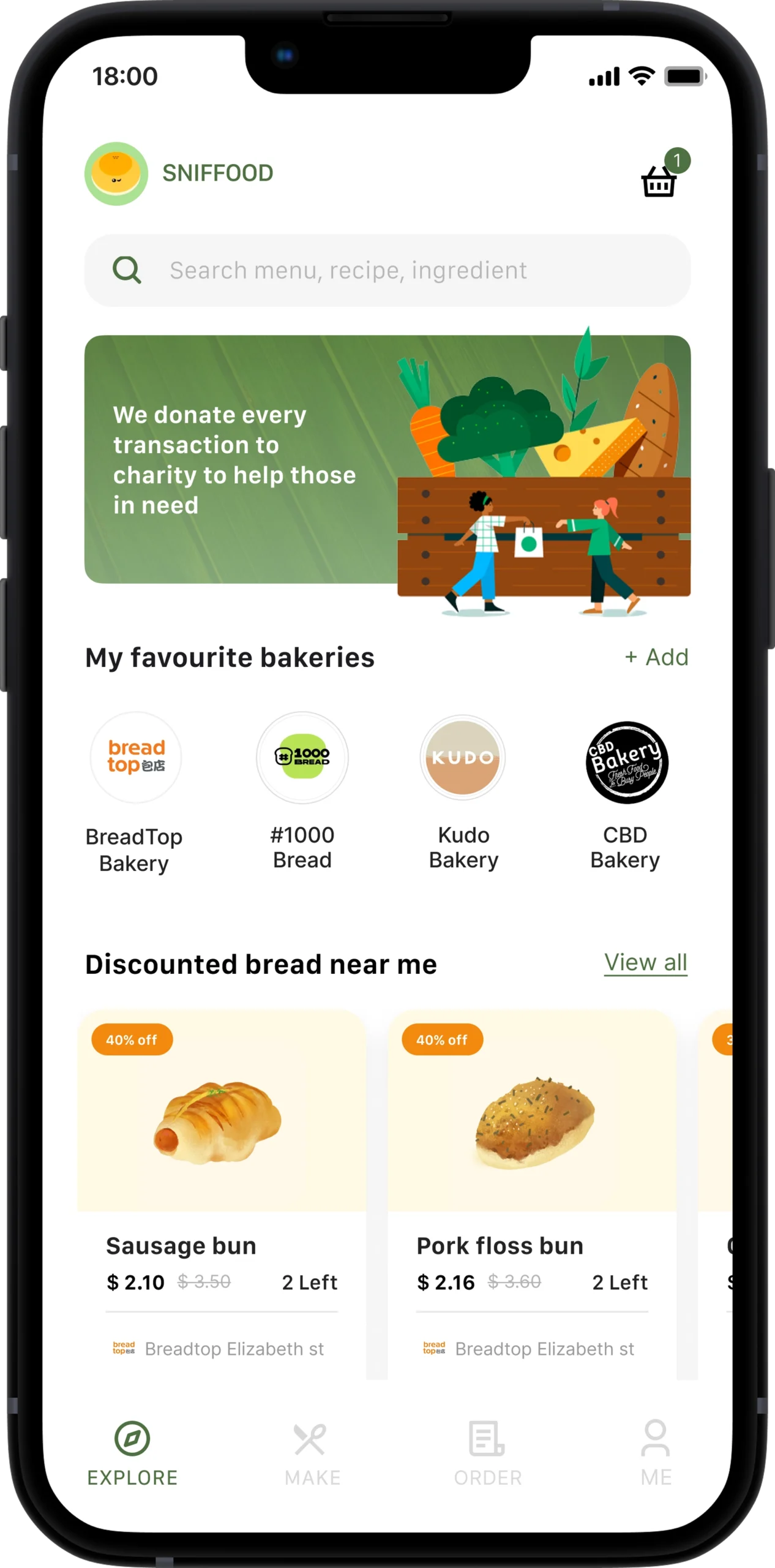
Customers benefit from the app by purchasing surplus bread at discounted prices, ensuring transparency in availability and reducing waste while enjoying fresh bread at a lower cost.

Additionally, a portion of the income from the surplus sales is automatically donated to local charities, supporting the community.
Part 1

Part 1. Auto prediction tool

Wireframe & User flow

The prediction tool emphasizes a streamlined user flow where users can quickly:
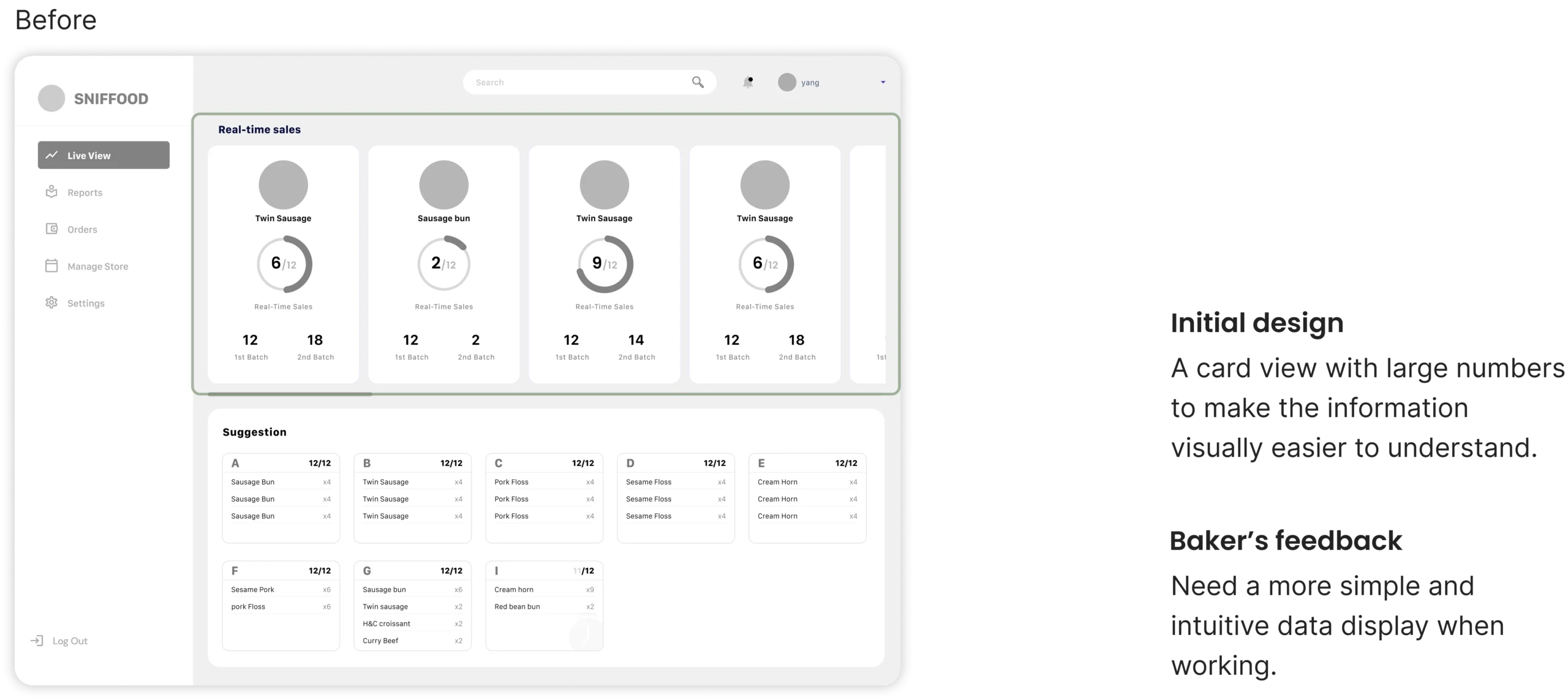
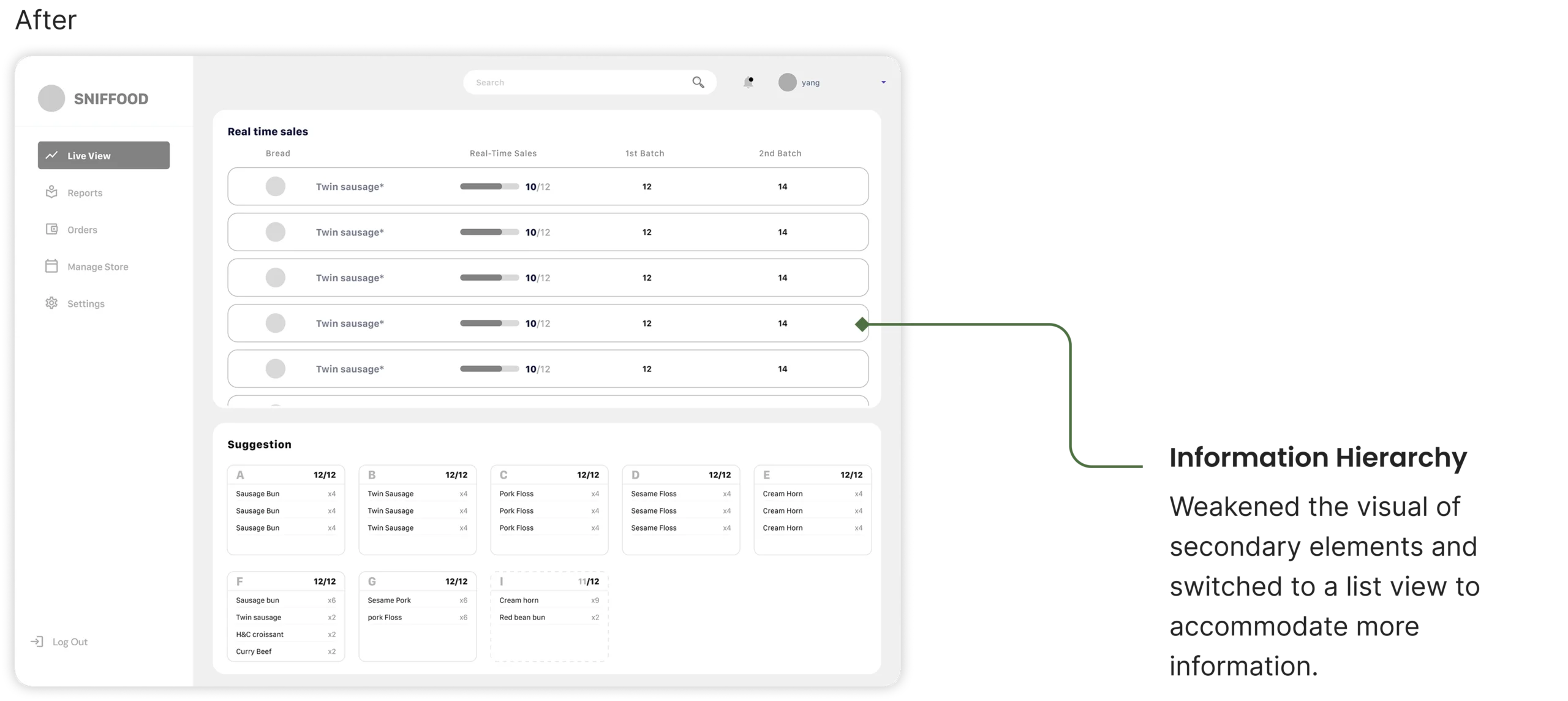
  • Accurate and real-time tracking of each batch of baking quantity
  • Visualized tray baking quantity to improve tray space utilization
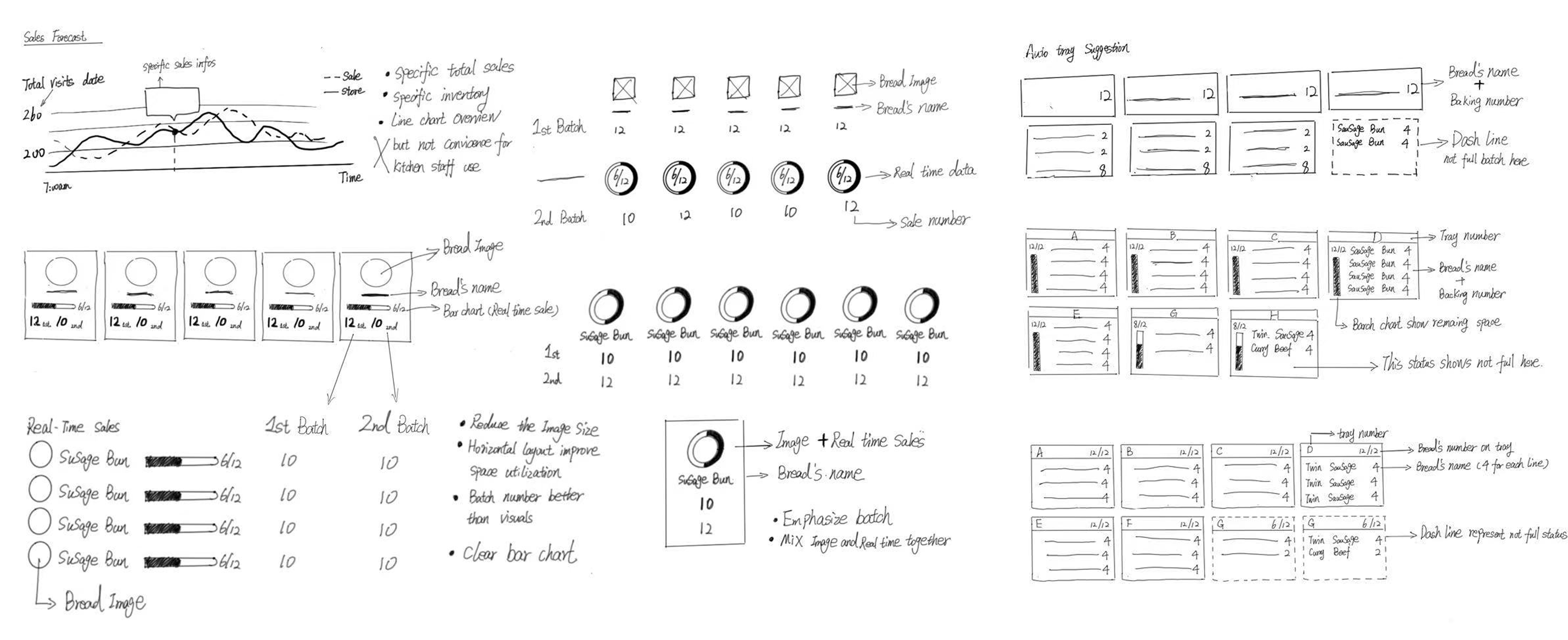
Initial ideation drafts for bakery prediction features

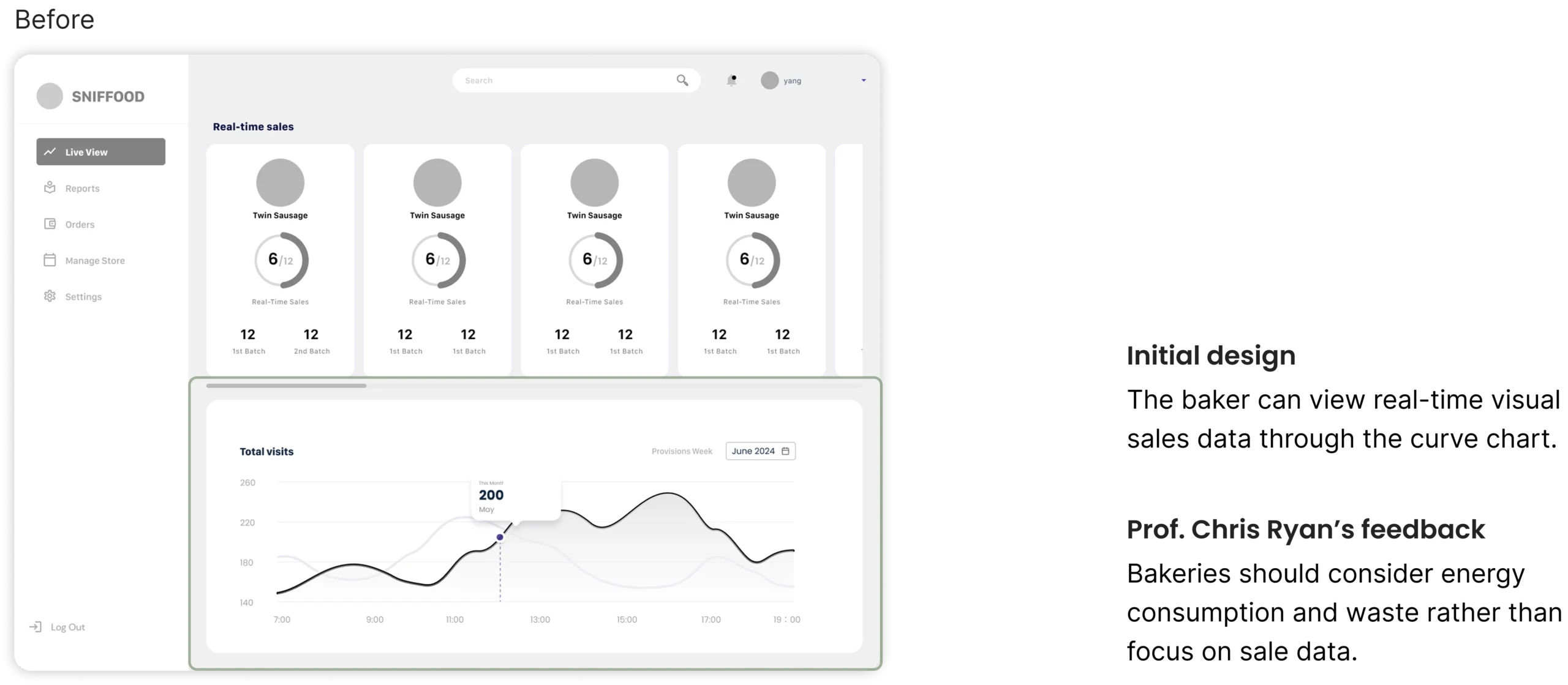
Design iteration

Iteration 1
Iteration 2

Part 2. App with Live Inventory

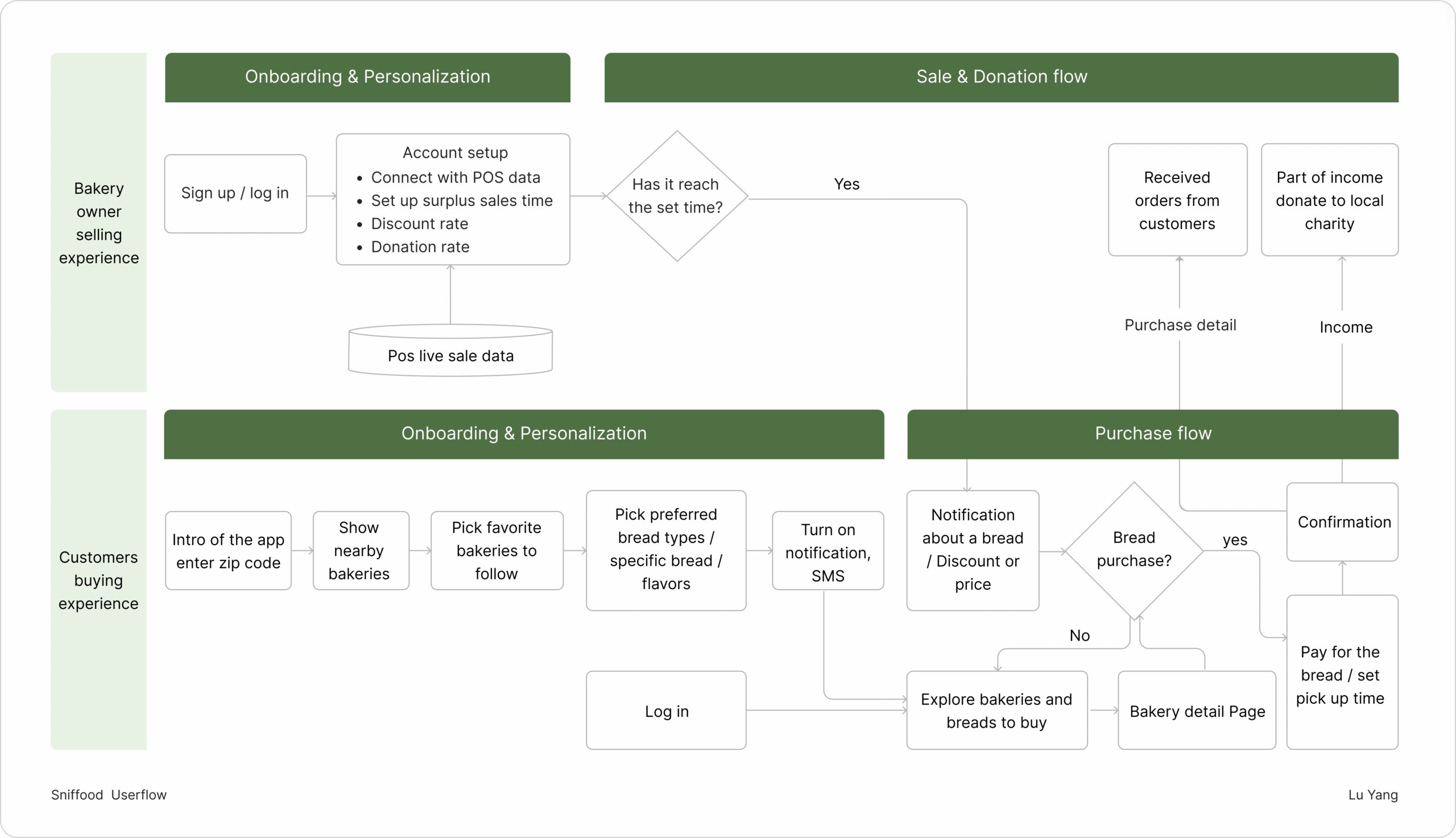
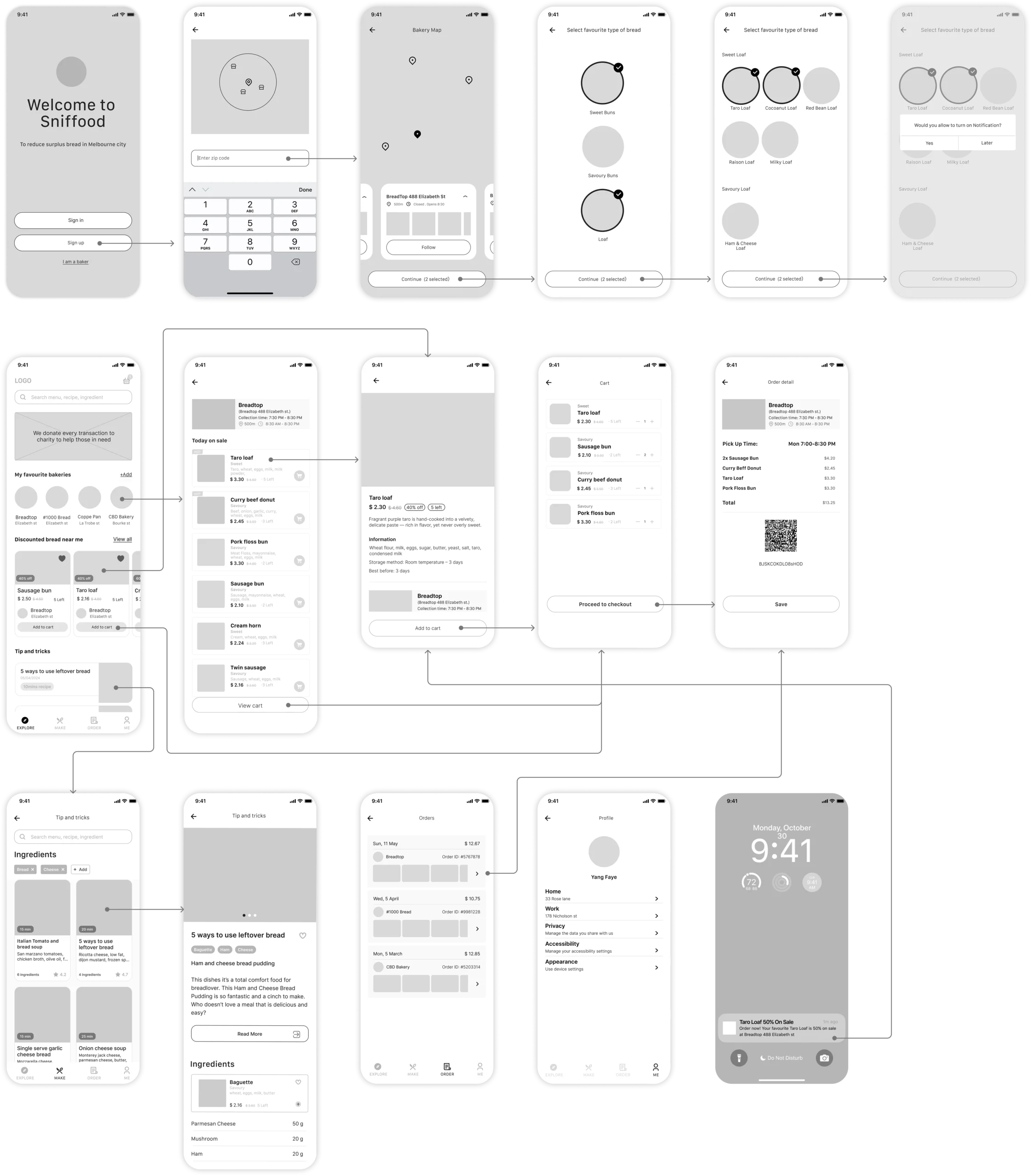
User flow

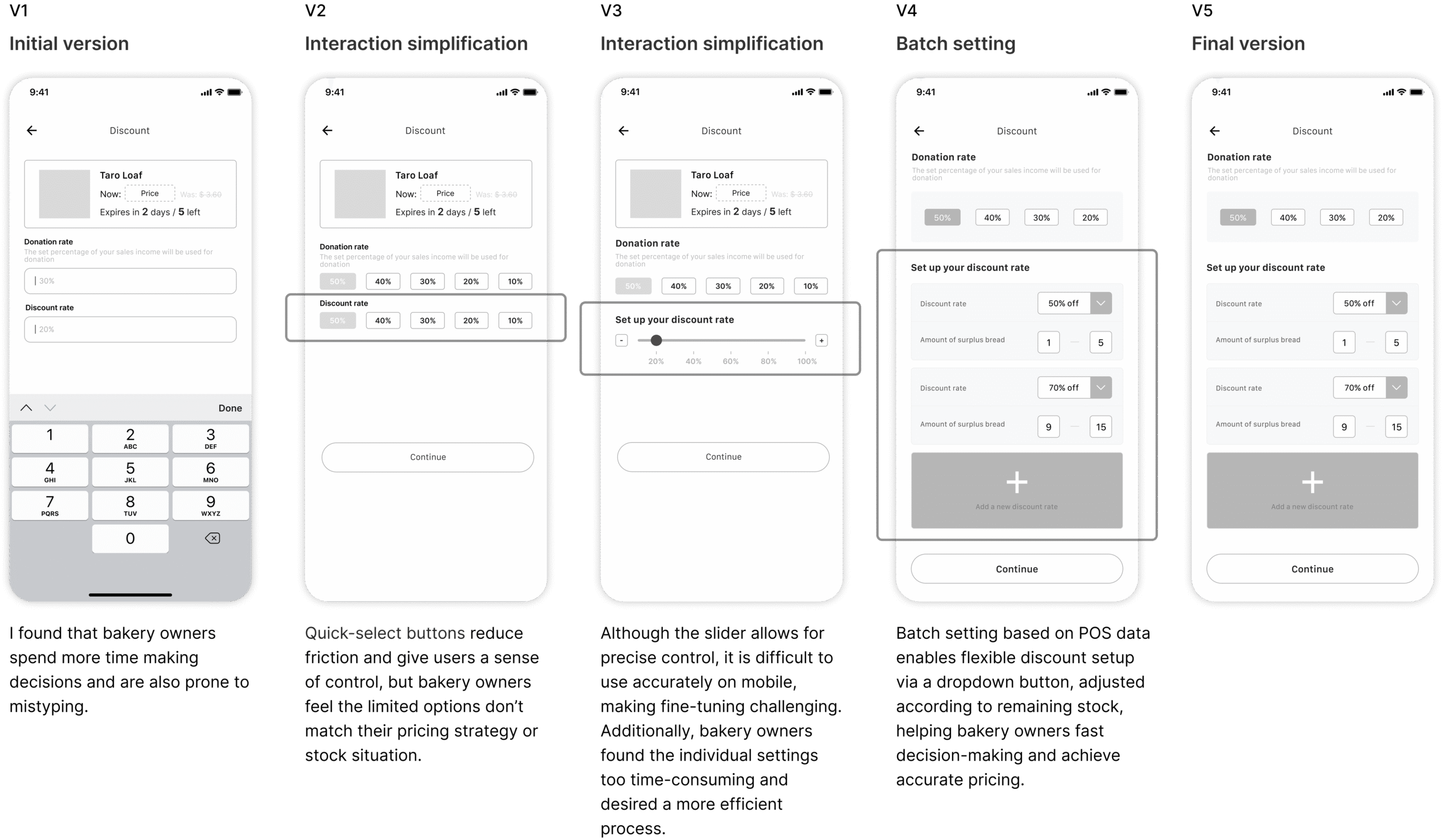
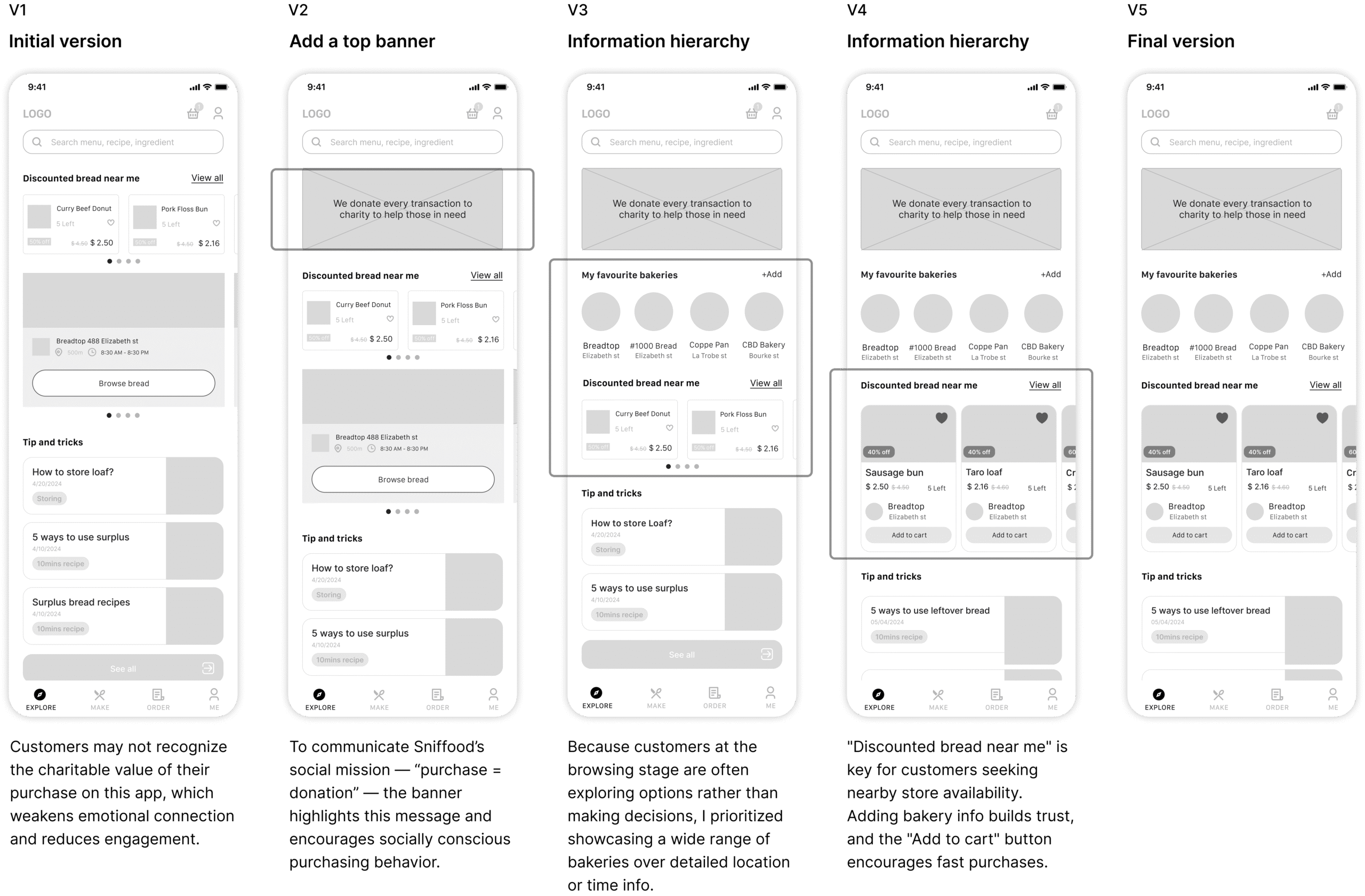
Design iteration 

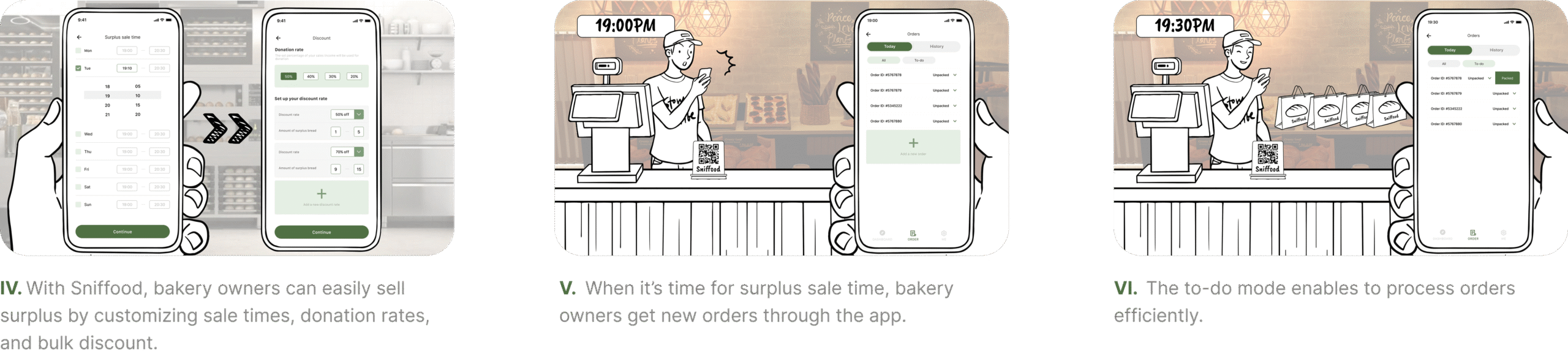
Discount and donation rate setup
Buying dashboard

Final low-fidelity user flow

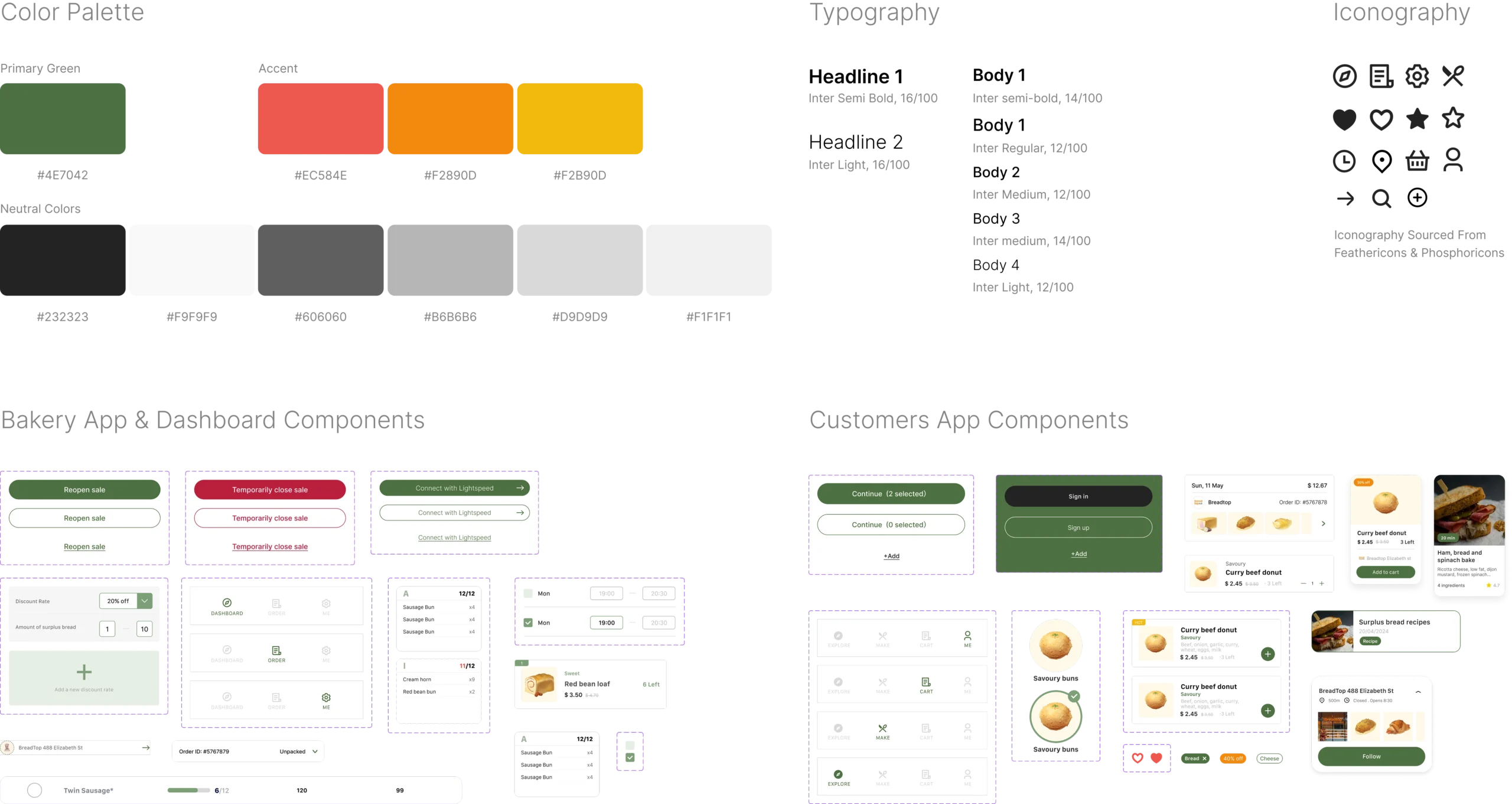
Visual design iteration

Final Design

Final design

Features

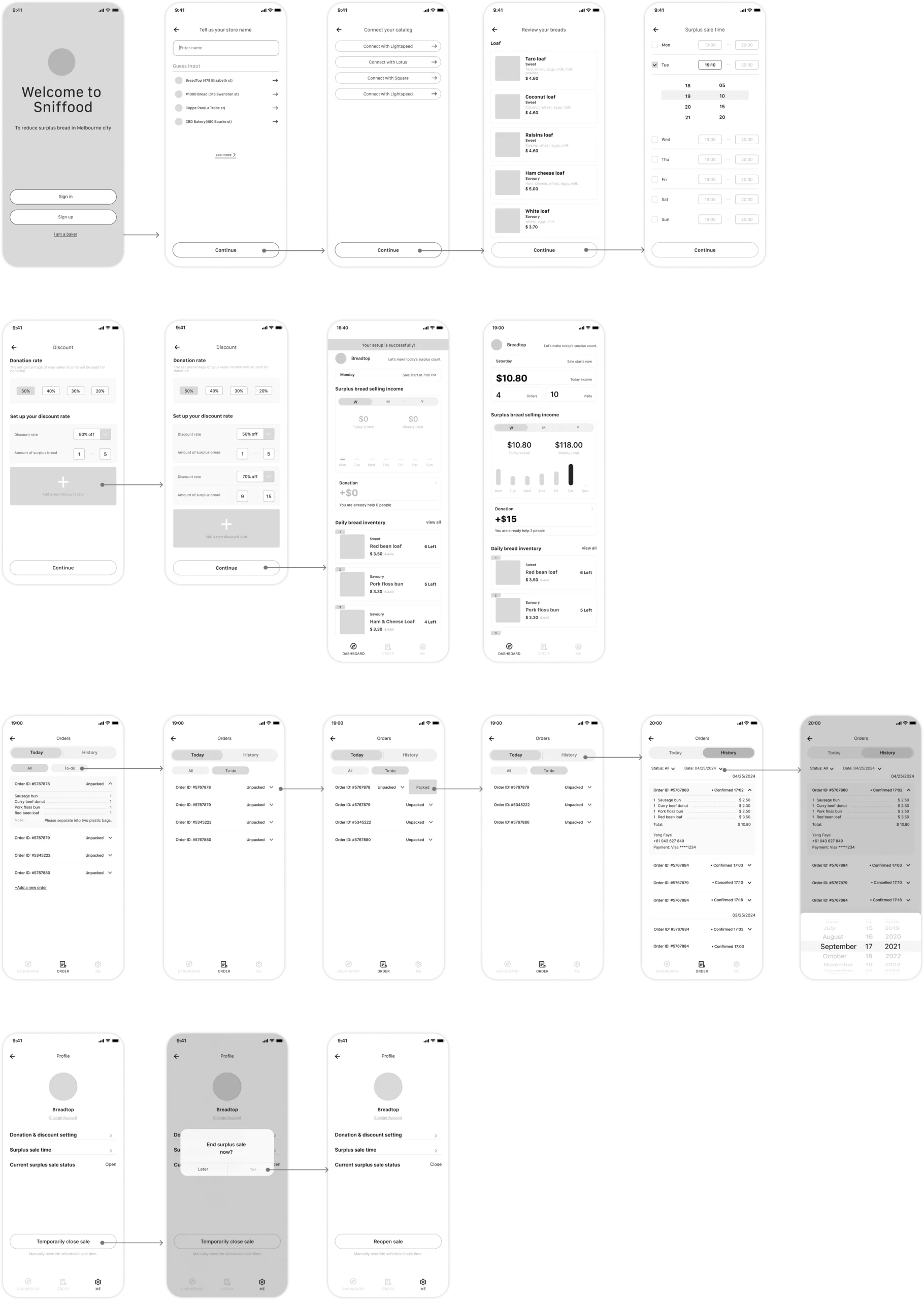
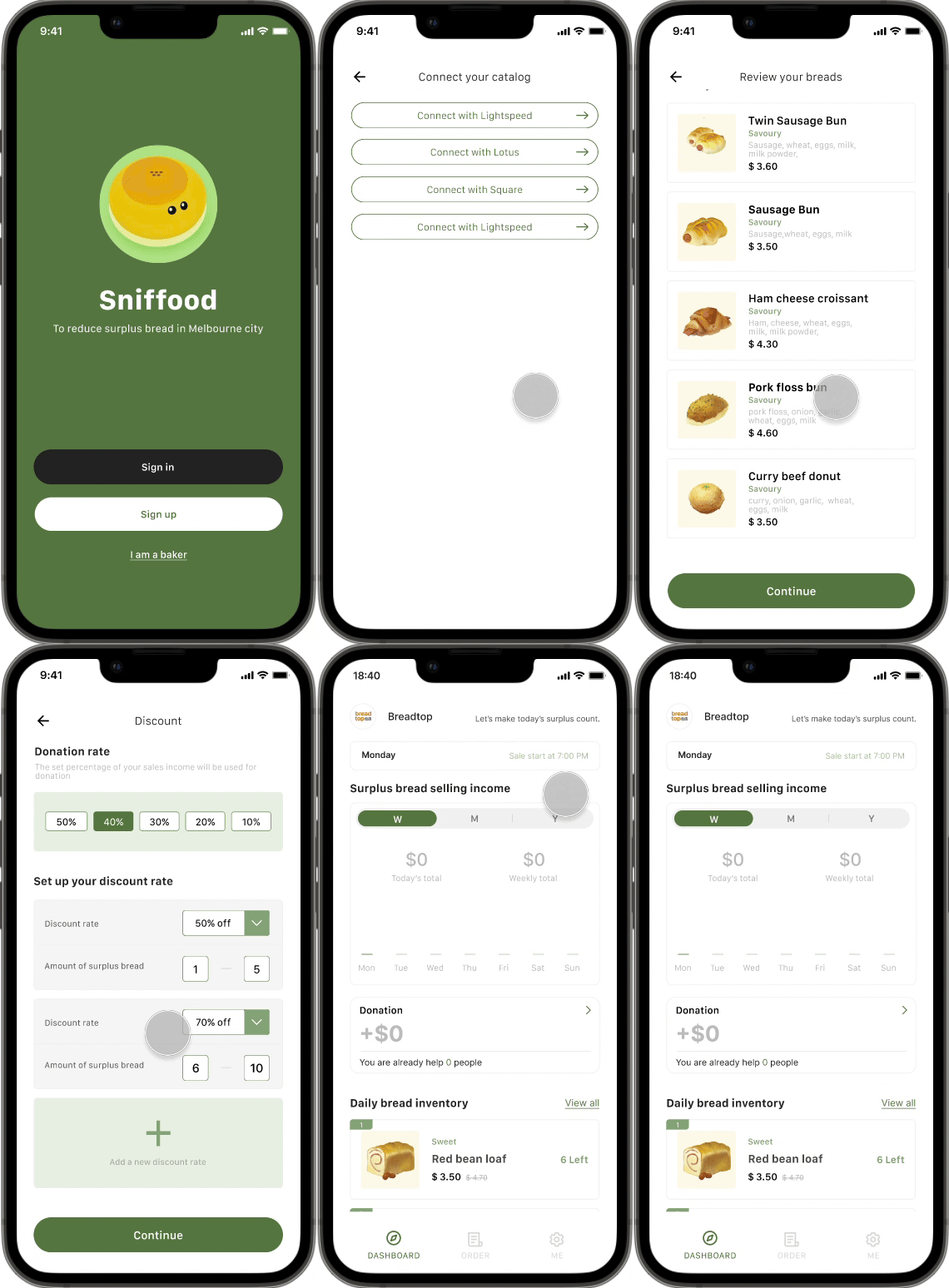
Fast Sign up & Onboarding
  • Connect the POS system to enable automatic inventory import
  • Batch setting with discounts and donation rate
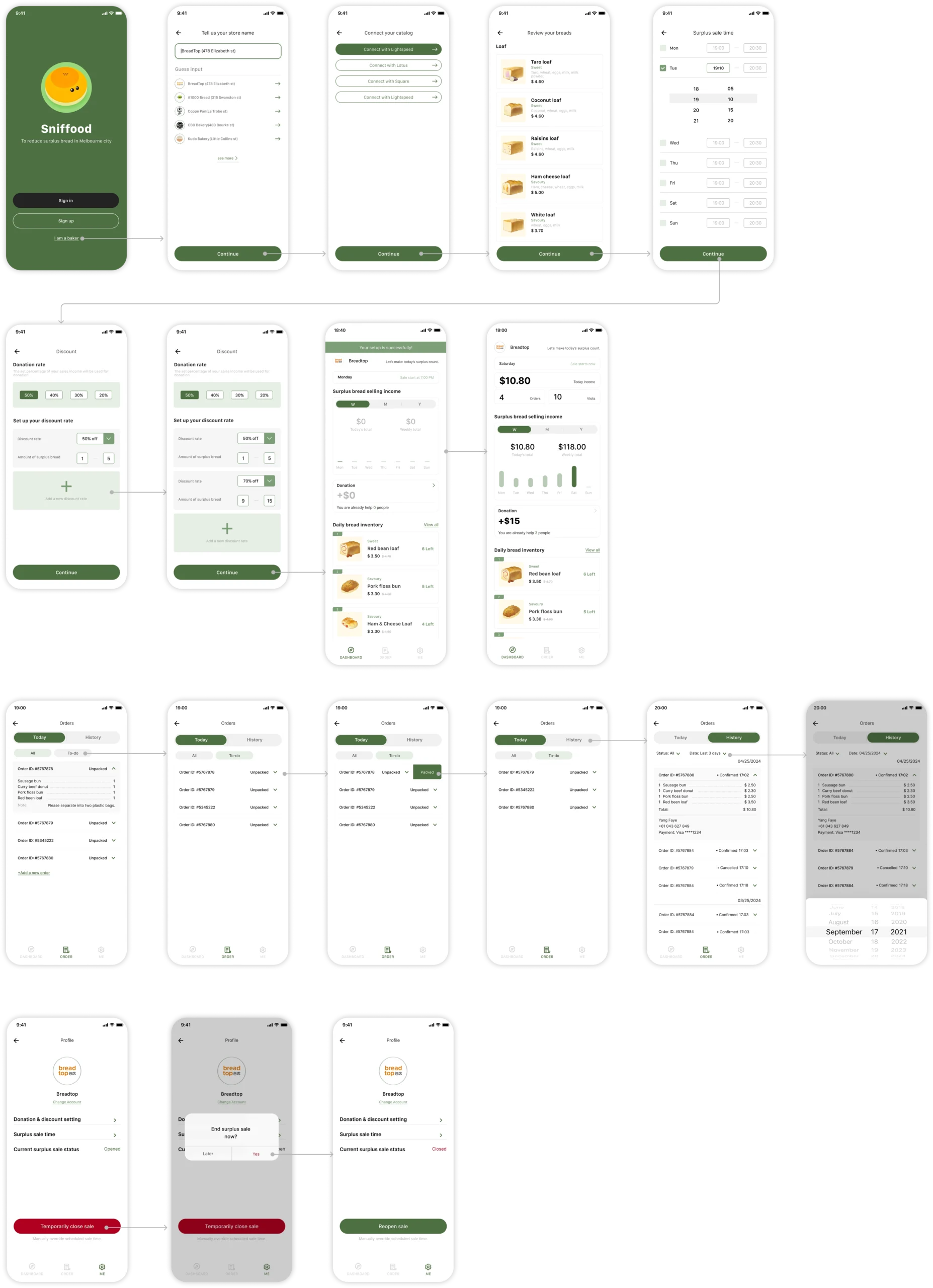
Onboarding & sign up flow
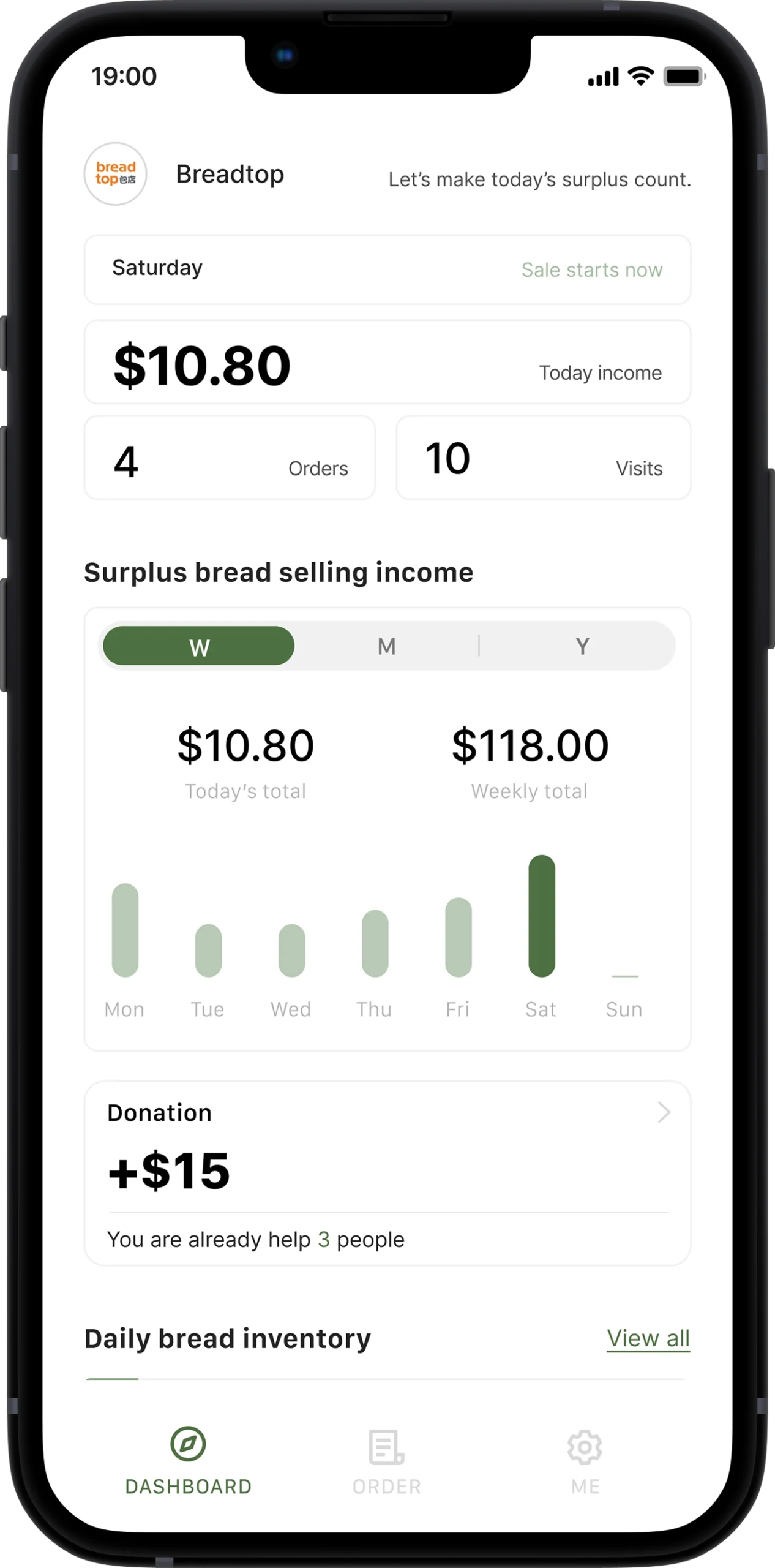
Bakery dashborad
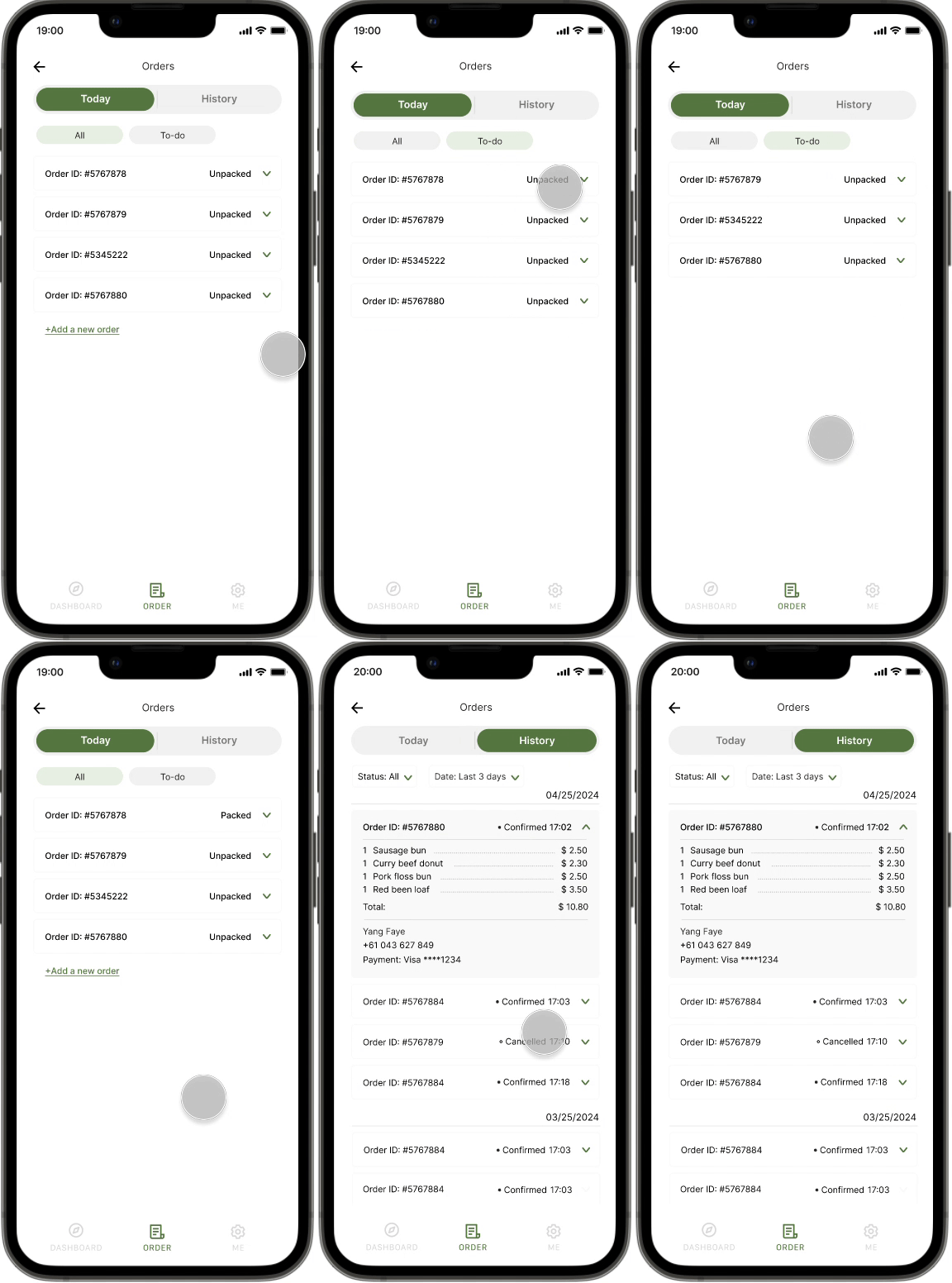
Efficient Order Management
  • Clear daily packaging order focus
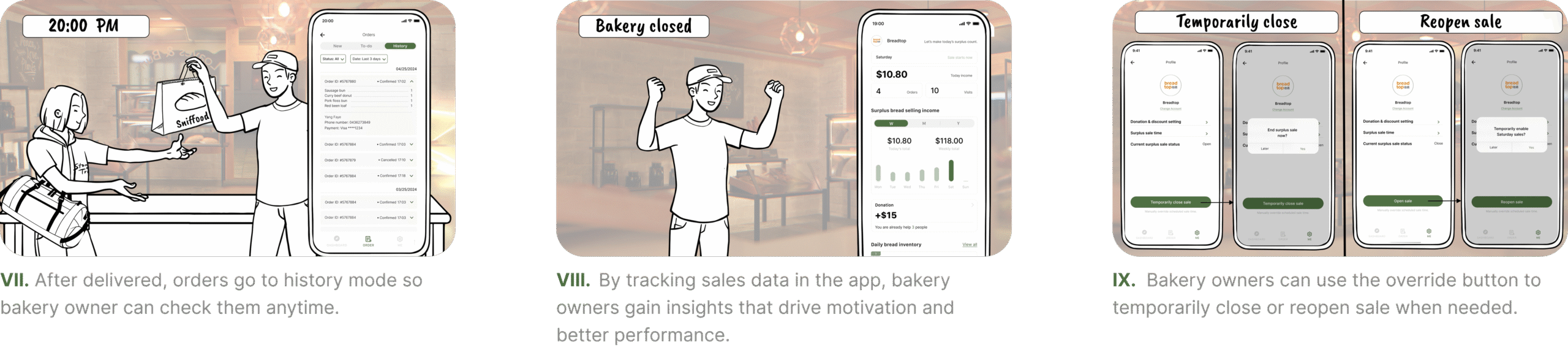
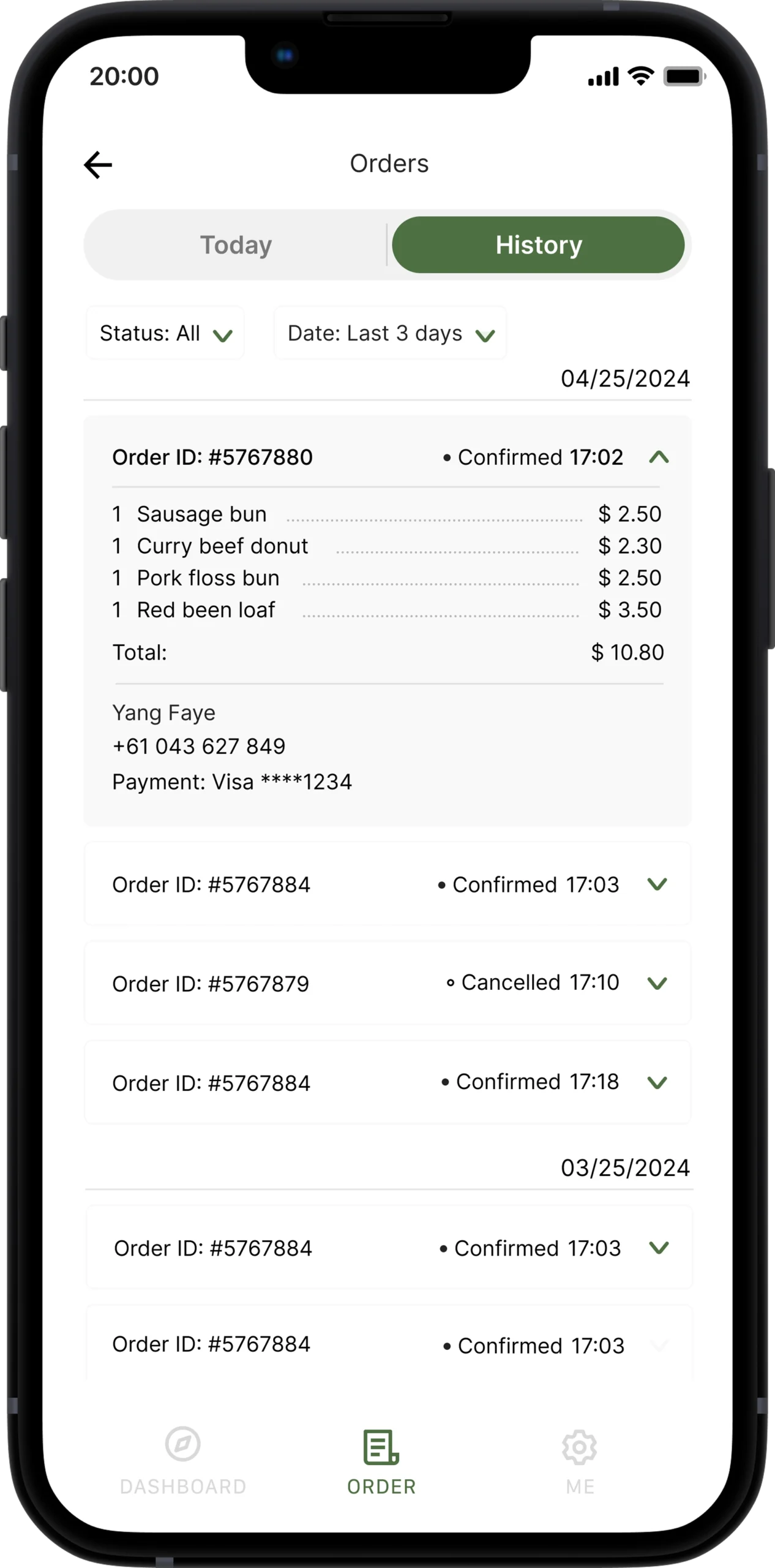
  • History section for review and analysis
Order management flow
Bakery orders history page
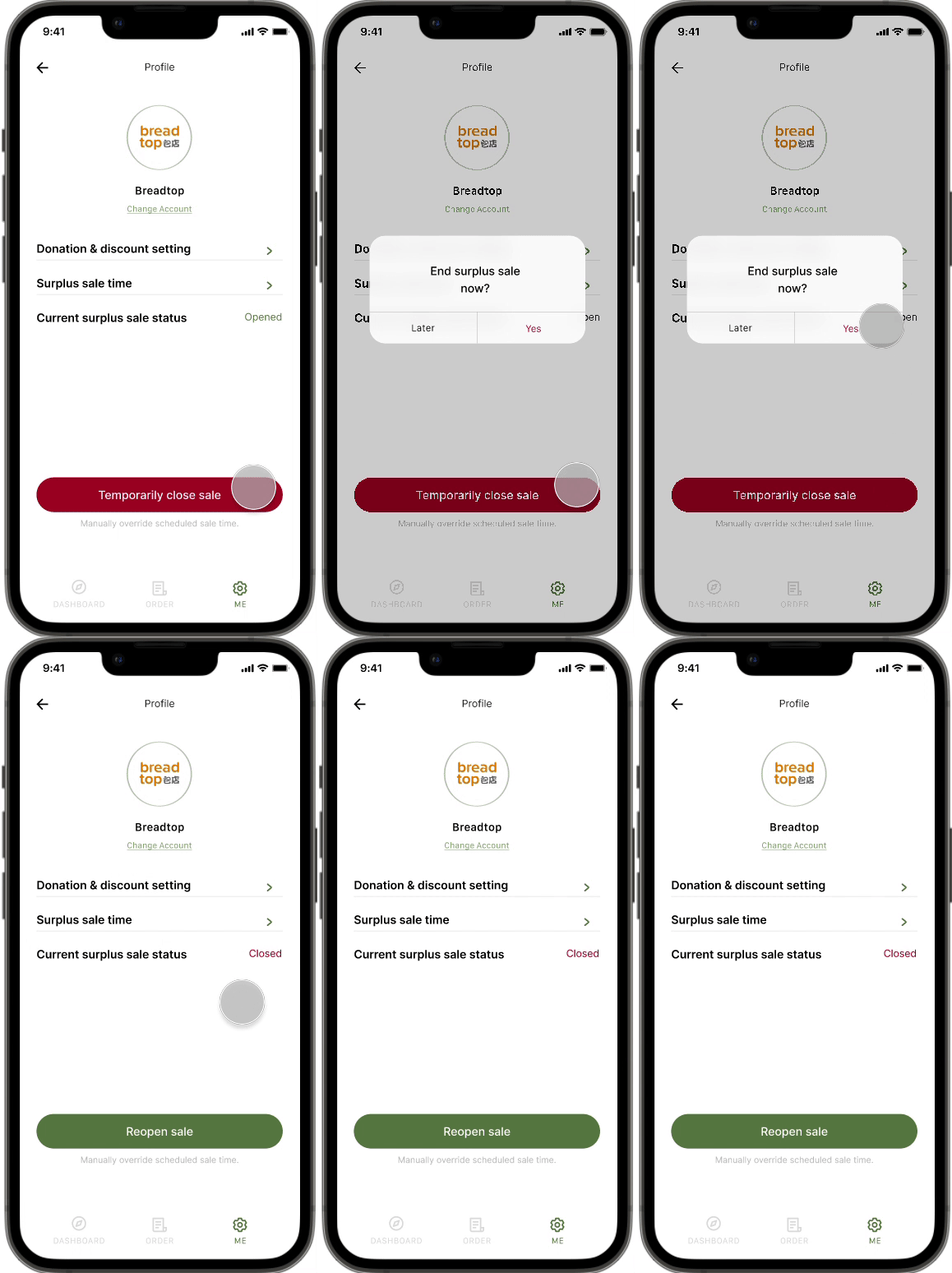
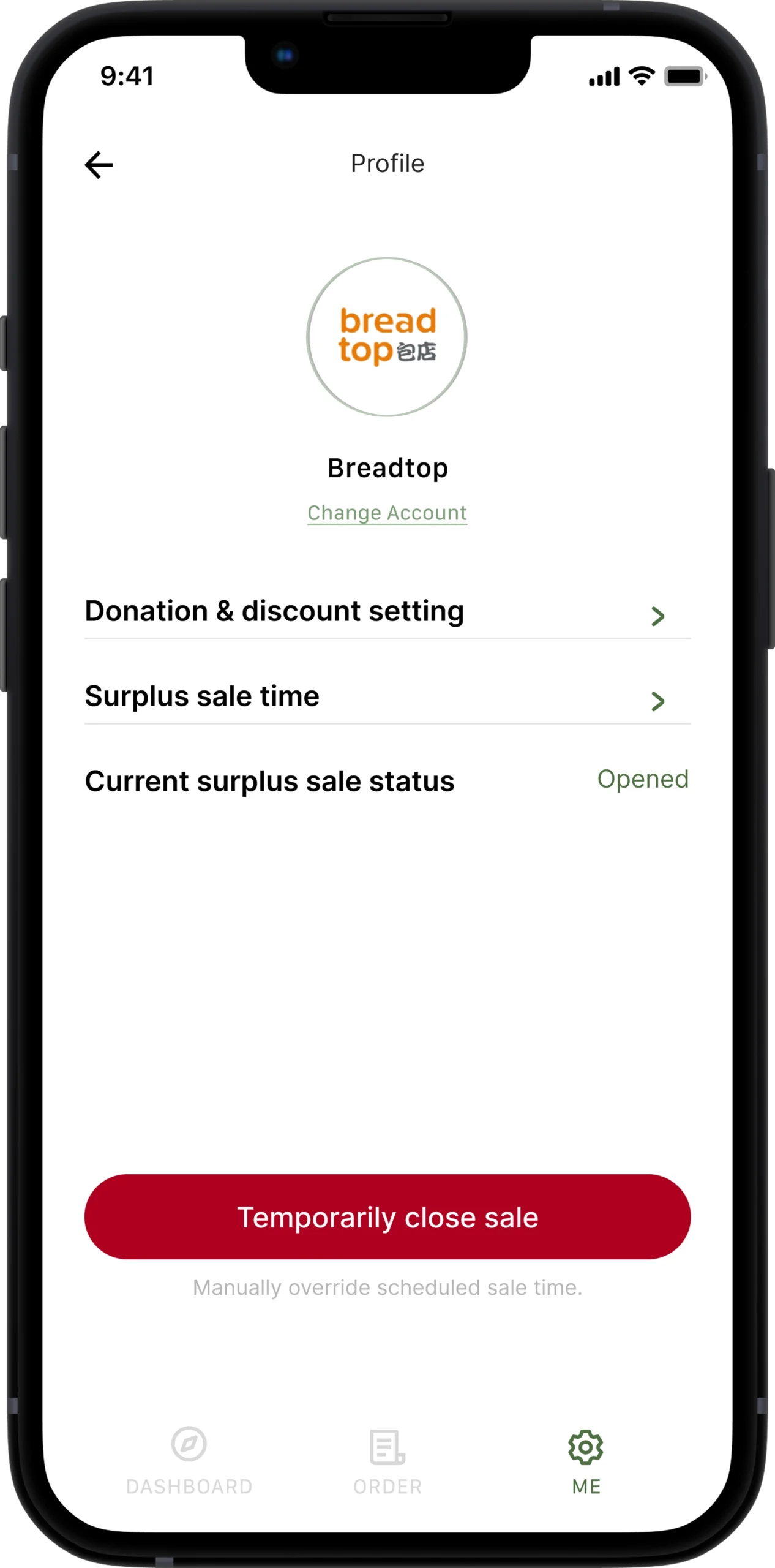
Manual Override
  • Flexibly switch store status( temporaliy closed & reopen)
Bakery temporarily closed flow
Me page
Real Time Sales Data
  • Adjust production in real time to reduce surplus
Smart Tray Consolidation
  • Intelligent arrangement to maximize tray space
Bakery prediction tool dashboard
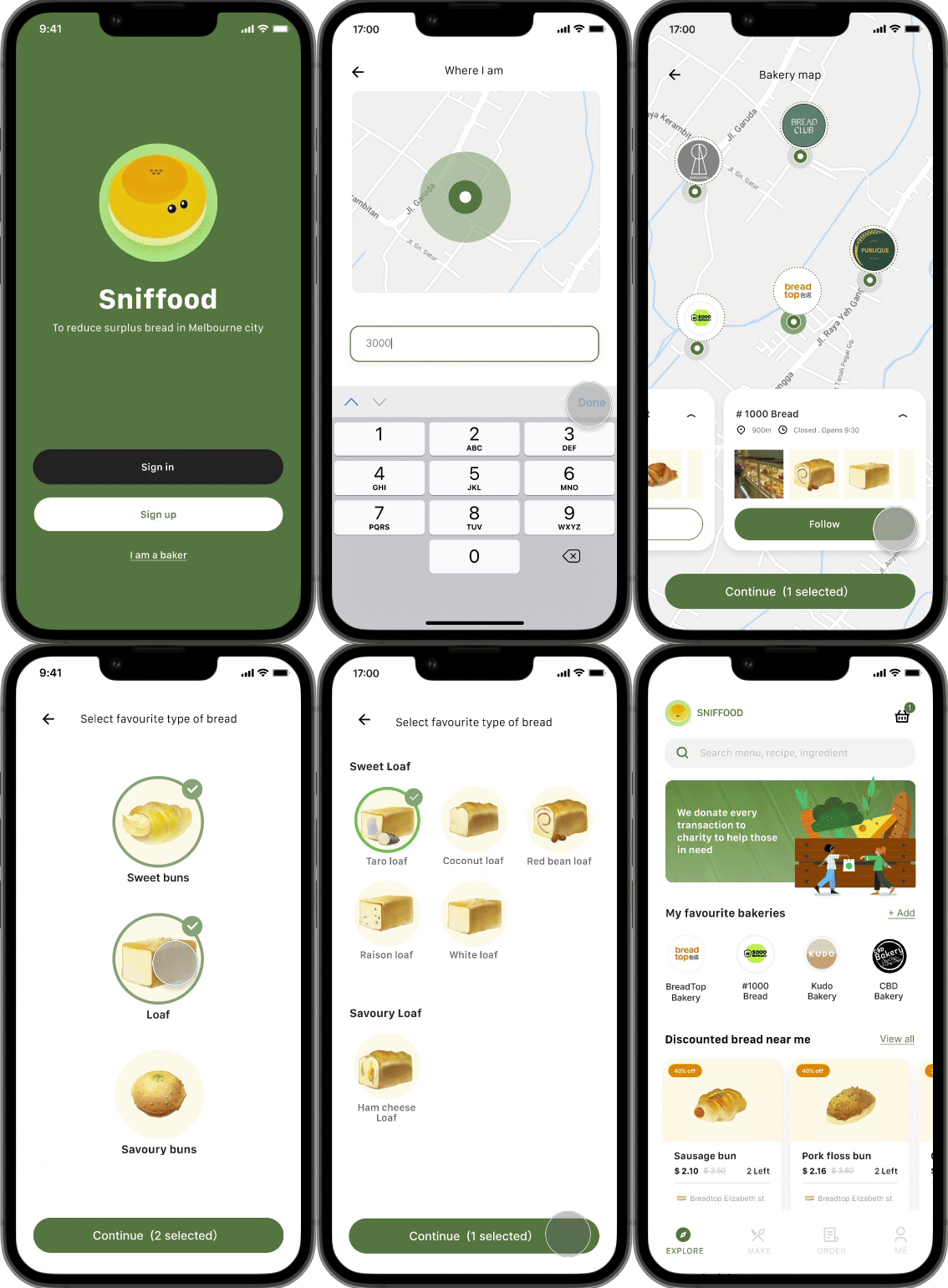
Sign up & Onboarding
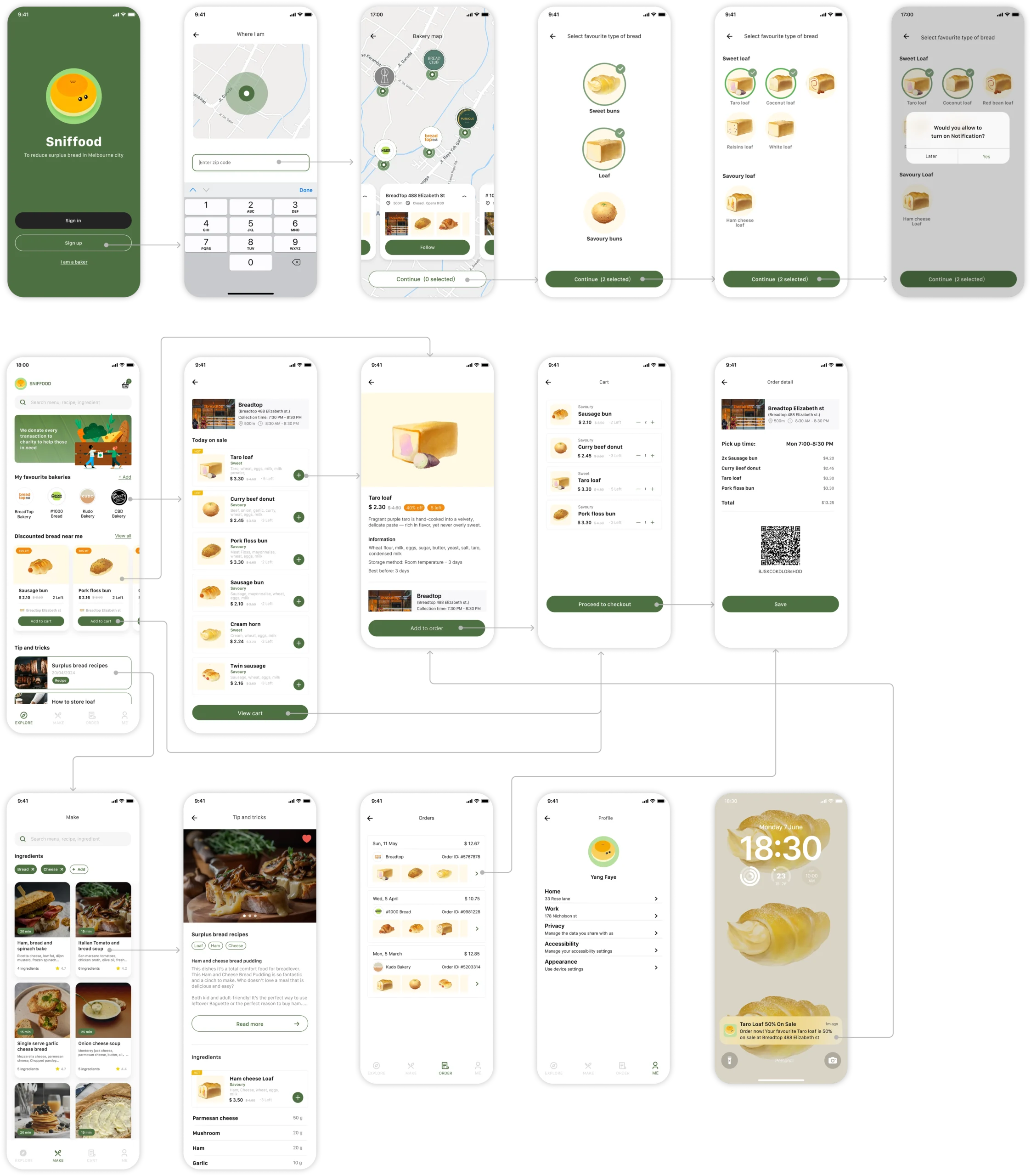
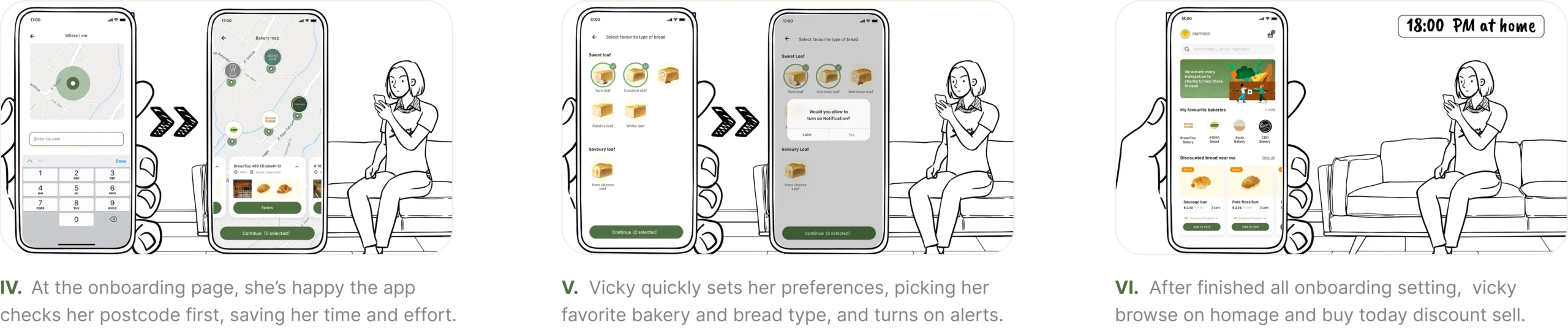
  • Search for nearby store postcode
  • Set personalized Preferences(Bread types) 
Sign up & Onboarding flow
Customers homepage
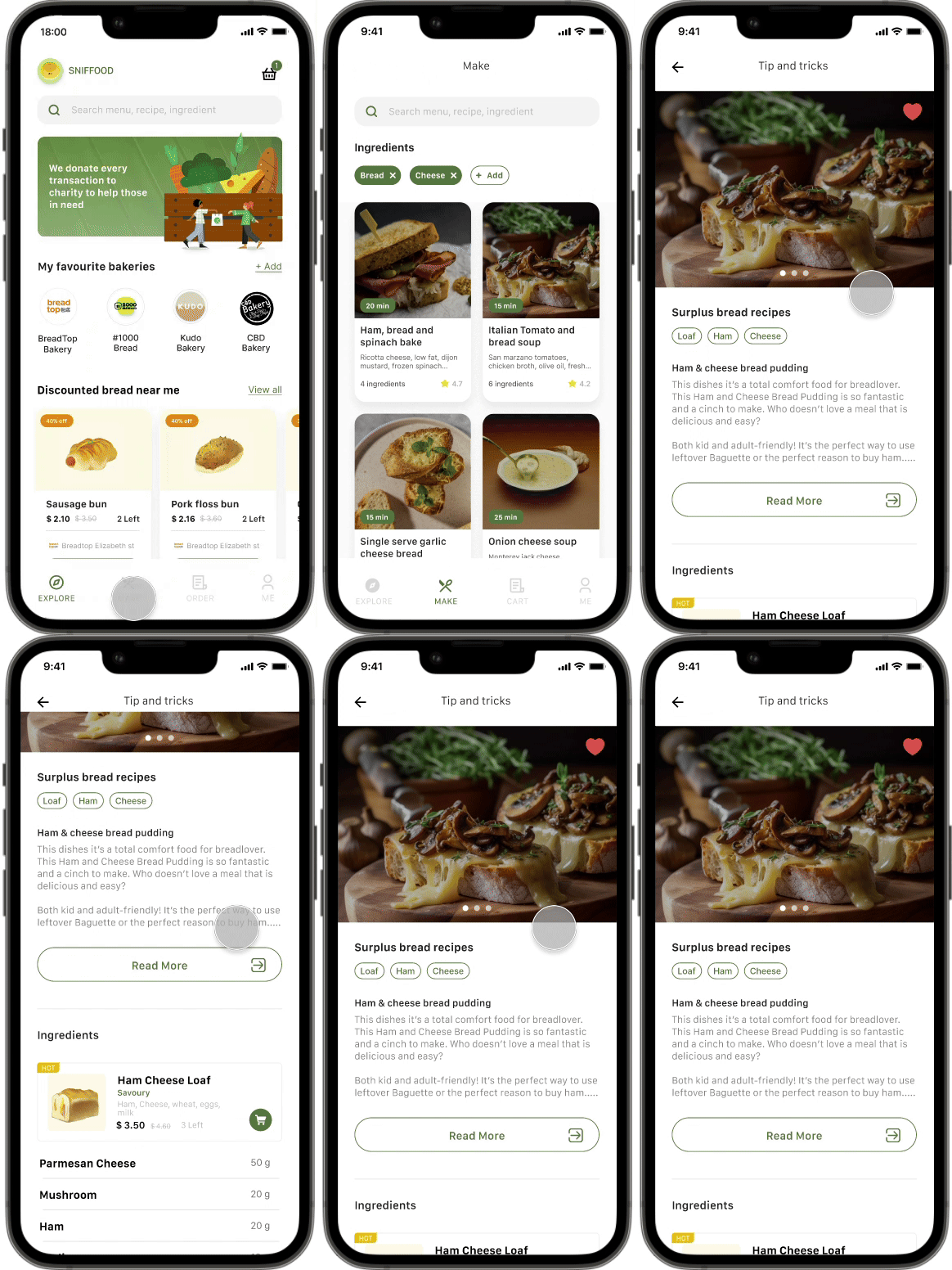
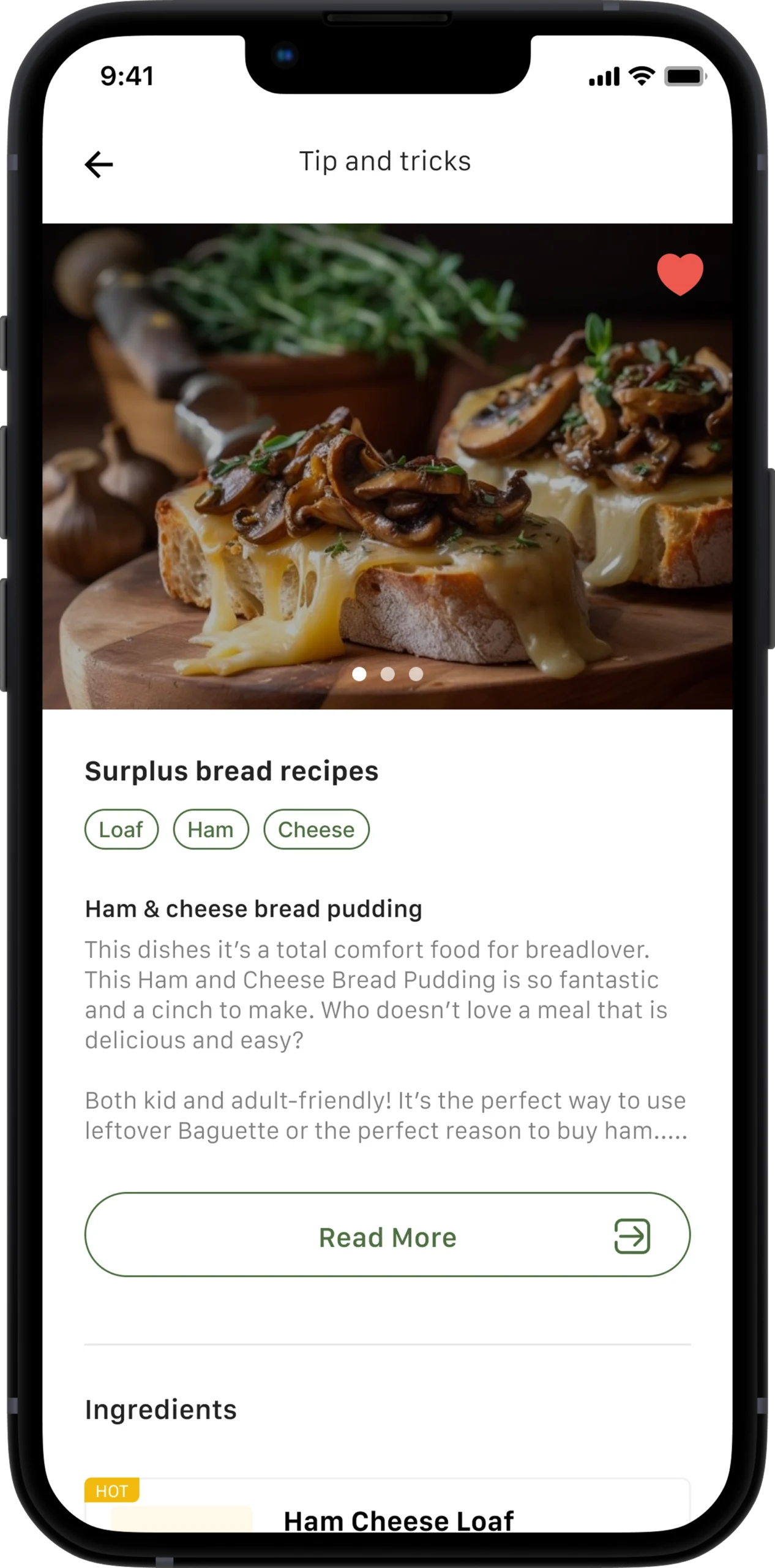
Cooking Guide
  • Search & explore recipes to use up surplus bread
Cooking guide flow
Tips and Tricks detail page
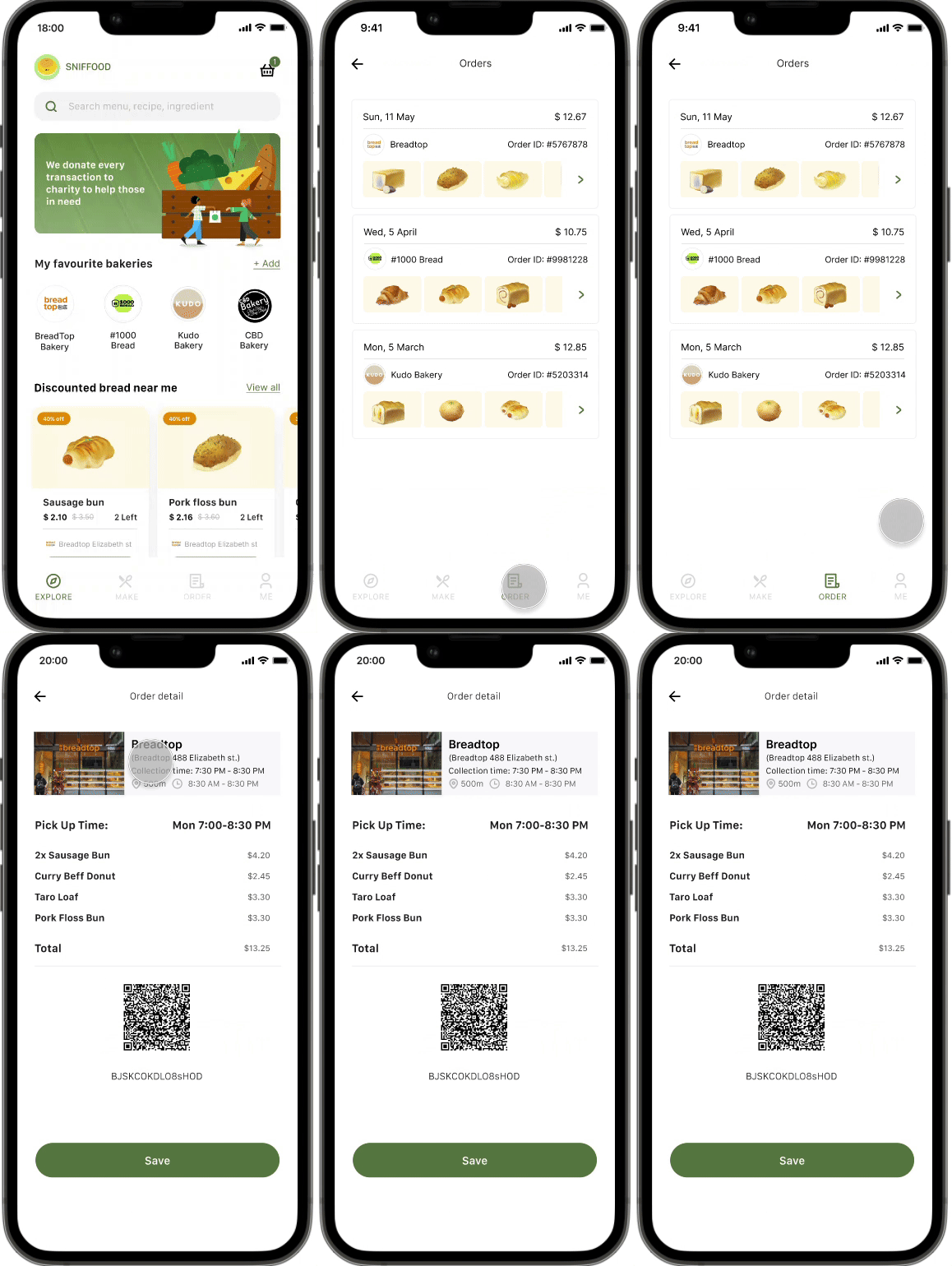
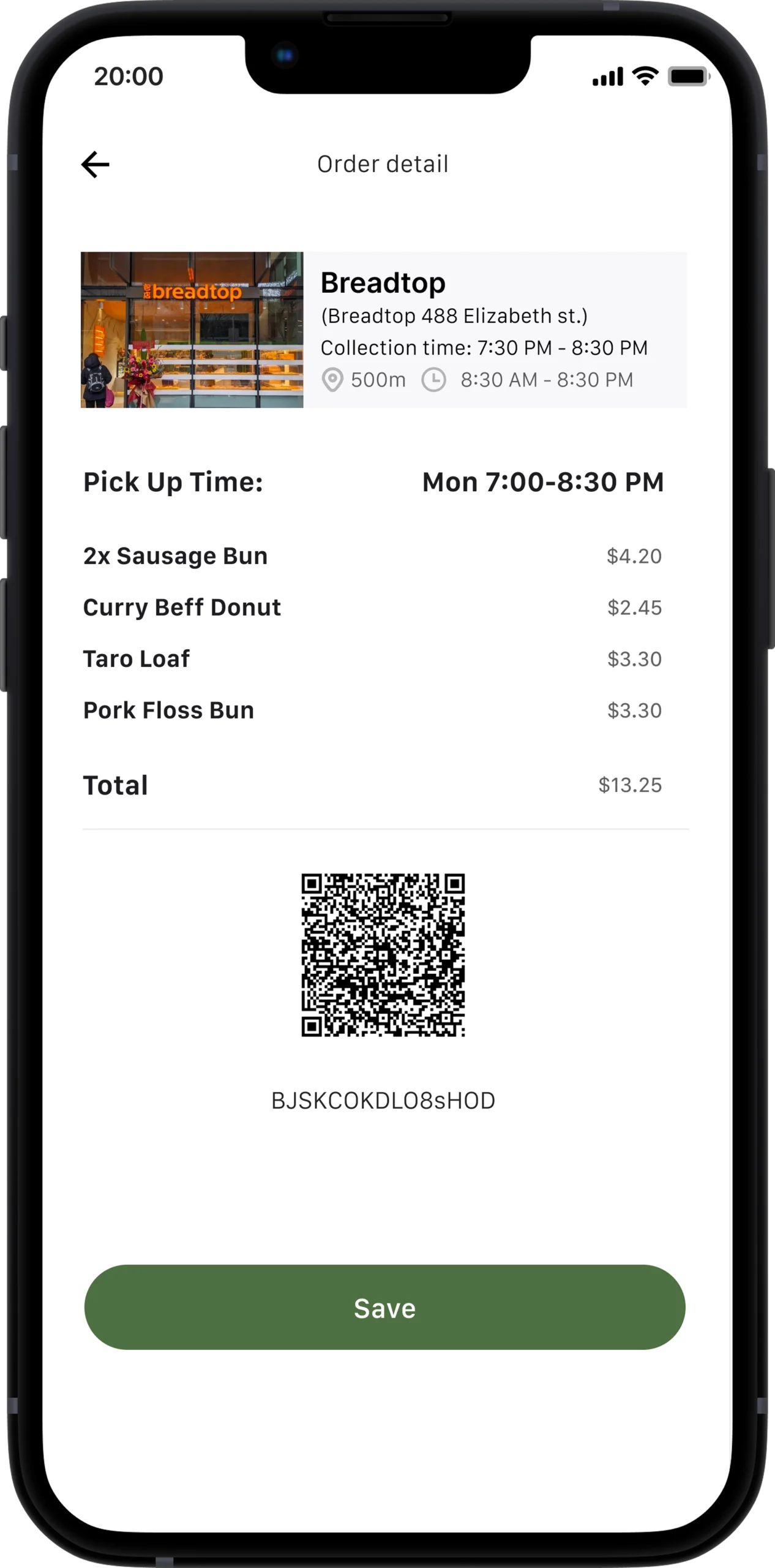
Quick Pickup
  • Access QR code in Orders for pickup
Quick order details acess flow
Order details page
Key Takeaways

Key takeaways

Challenge
The biggest challenge was ensuring all components worked together seamlessly as a system, rather than as isolated tools.
Lesson learned
This project taught me how to design an end-to-end system for both customers and merchants, balancing different user needs.

By creating a customer app, a merchant backend, and a prediction dashboard, I learned to think across the whole user journey and connect design with operations and data.

The goal was to reduce food waste, and I focused on making every part of the system contribute to that impact.
Next step
To further improve the product, I would focus on strategies to increase user retention — such as introducing a loyalty program or refining notification timing based on user behavior.